
- SPARK AN IDEA
- STARTING UP
- GROW YOUR BUSINESS
- LEADERSHIP & STRATEGY
- SUSTAINABILITY
-
technology
- sales & marketing
- finance
- Accelerators
- Acquisitions
- Agriculture
- Airlines
- Analytics
- Angel Investment
- Animation
- Arabic Content
- Arabnet
- Book Reviews
- Call Centers
- CoE Animate
- CoE Cards
- CoE E-Commerce
- Competitions
- Conferences
- Corporate Governance
- Corruption
- Coworking Spaces
- Crowdfunding
- CSR
- Daily Deals
- Demystifying E-Commerce
- Design
- Diaspora
- Digital Marketing
- Digital Media
- du
- E-commerce
- E-procurement
- Ecosystem
- Education
- Endeavor
- Entertainment
- Entrepreneur of the Week
- Environment
- Exits and Sales
- Fadi Ghandour
- Failure
- Fashion
- Food & Beverage
- Green Energy
- Health
- Hiring
- Innovation
- Invention
- Investment
- Job Recruitment
- KAUST
- Legal
- Marketing
- Media
- Medical
- MIT
- MITEF Arab Business Plan Competition
- Mobile
- Mobile Apps
- Mobile Gaming
- Negotiation
- Oasis500
- Ranking
- SMS
- Social Entrepreneurship
- Social Media
- Startup Communities
- Startup Weekend
- Team
- Travel
- Trends
- User Experience Design
- Valuation
- Video On Demand
- Wedding Industry
- Wharton
- Woopra
- Workshops
most recent articles
most popular articles
10 Tips for Giving and Receiving Good Feedback
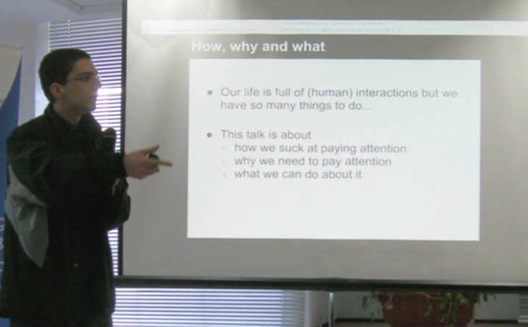
Sebastien Trzcinksi-Clement, the MENA Developer Relations Lead at Google, knows a thing or two about developing a good relationship with your network, whether that includes customers, colleagues, or employers. The bedrock of these good relationships is feedback. These are the tips for giving and receiving feedback, that he presented at Startup Weekend Cairo 2012:
Giving Good Feedback:
- A good critic spends as much energy describing what something is as what something isn’t. So make yourself stand out by making any criticism constructive and useful.
- Offer youe criticism, commentary, or advice without attaching negative energy.
- Remember that good and bad are not the same as like and dislike, so keep your personal taste out and be objective.
- Valid criticism doesn’t mean that the work can be fixed, or is worth fixing, so be aware of this when offering feedback.
- If the receiving party is thin-skinned, sandwich negative comments between positive ones, taking a "positive, negative, positive" approach.
Receiving Feedback Well:
- Think before you respond. Thinking takes time, so don’t rush.
- Don’t be defensive. Feel free to ask clarifying questions.
- If you agree with a criticism but can’t think of a fix, ask for a suggestion.
- Take control of the feedback process by asking for feedback in a structured way so that you can deal with it systematically.
- Not all feedback is useful. There’s a lot of BS out there, so find out who you get the best feedback from and pick them as your feedback partners.
Why put in the effort to give and receive feedback well?
By being honest and helpful, to ourselves and others, we:
- Improve what we do.
- Become more credible.
- Demonstrate our uniqueness and humanity.
- Expand our business opportunities.
- Never have to worry about being caughtlying.
- Create a healthy and trustful network.
- Find people who want to work with us.
- Generate loyalty, sales, and learning.
- Make genuine friends.
--
Omar Aysha is a former video-game developer, turned IT entrepreneur and writer, who is launching an Egyptian entrepreneurship magazine.
Creating a Culture Shift in Cairo
Fill a room with equal numbers of people from the arts, software developers, NGO volunteers, and business professionals. …My Pillow: A Donor-Matching Platform for the…
[Arabic]. Young Palestinian entrepreneur Bayan Bibi, who lives in Lebanon, speaks about the idea she pitched during…Waselny: A Carpooling Service to Reduce Traffic…
At Startup Weekend Amman, Anas Saudieh describes his social carpooling service, which is designed to help citizens…
Do you know an entrepreneurial story that needs to be told?
Blog from your Wamda profile or tell us about it at editor@wamda.com

Wamda is a platform that supports and invests in MENA entrepreneurs.
Half the time I wonder how many of these people even have the experience or data to back up their claims. What bothers me the most is when categorical pronouncements that idea x or idea y "never work". Um...must every case study replicate itself across the board for eternity? Me thinks not.
And isn't entrepreneurship sometimes about proving tested theories wrong?
I feel that very few ideas deserve to be thrown in the trash in the way you see some audience members doing it via Twitter, etc.. In my opinion, some ideas are simply more palatable and less risk-prone to the investor's wallet than others. Perhaps if there was less of an obsession about making instant returns on investment, then the Arab World might yield investors that are open to less conventional and commercially straightforward start-up ideas.