
After March slump, MENA startup funding rebounds to $150 million in April 2026
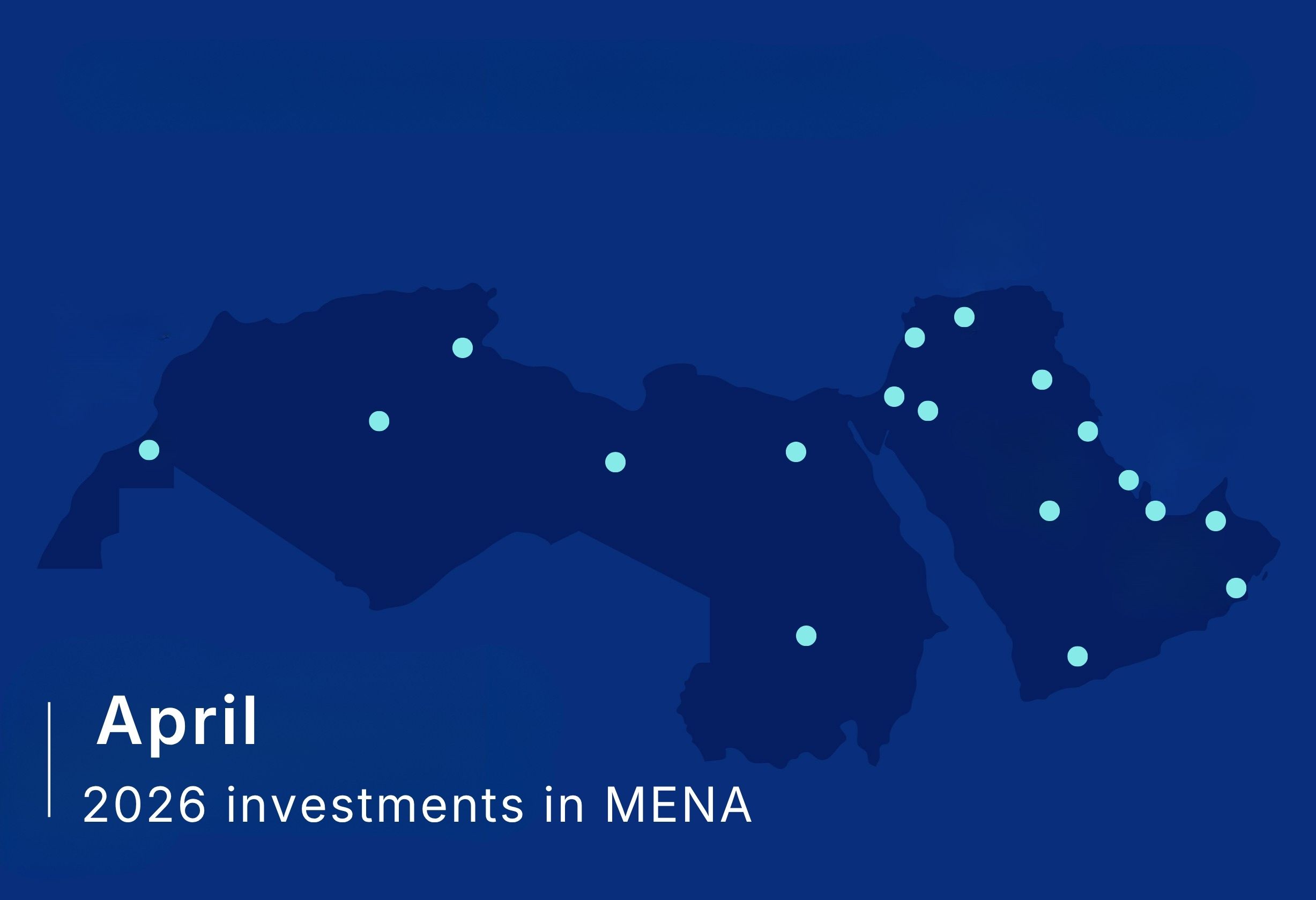
Investment activity across the Middle East and North Africa showed early signs of recovery in April 2026, with total funding climbing to $150 million across 27 deals, up 211% month-on-month following March’s sharp slowdown.
Yet the rebound remains uneven. Funding is still down 42% year-on-year, and notably, half of April’s capital came through debt financing, underscoring a cautious market that still prioritises structured capital over equity risk.
While geopolitical tensions remain unresolved, the relative stability carried into early May has provided just enough visibility for investors to step back in. The response has been measured rather than optimistic, with capital concentrating into fewer, larger transactions and sectors that can withstand prolonged uncertainty.
A measured return, not a full recovery
April’s increase in both deal volume and value marks a clear departure from March’s pause, but the underlying dynamics suggest restraint rather than renewed momentum.
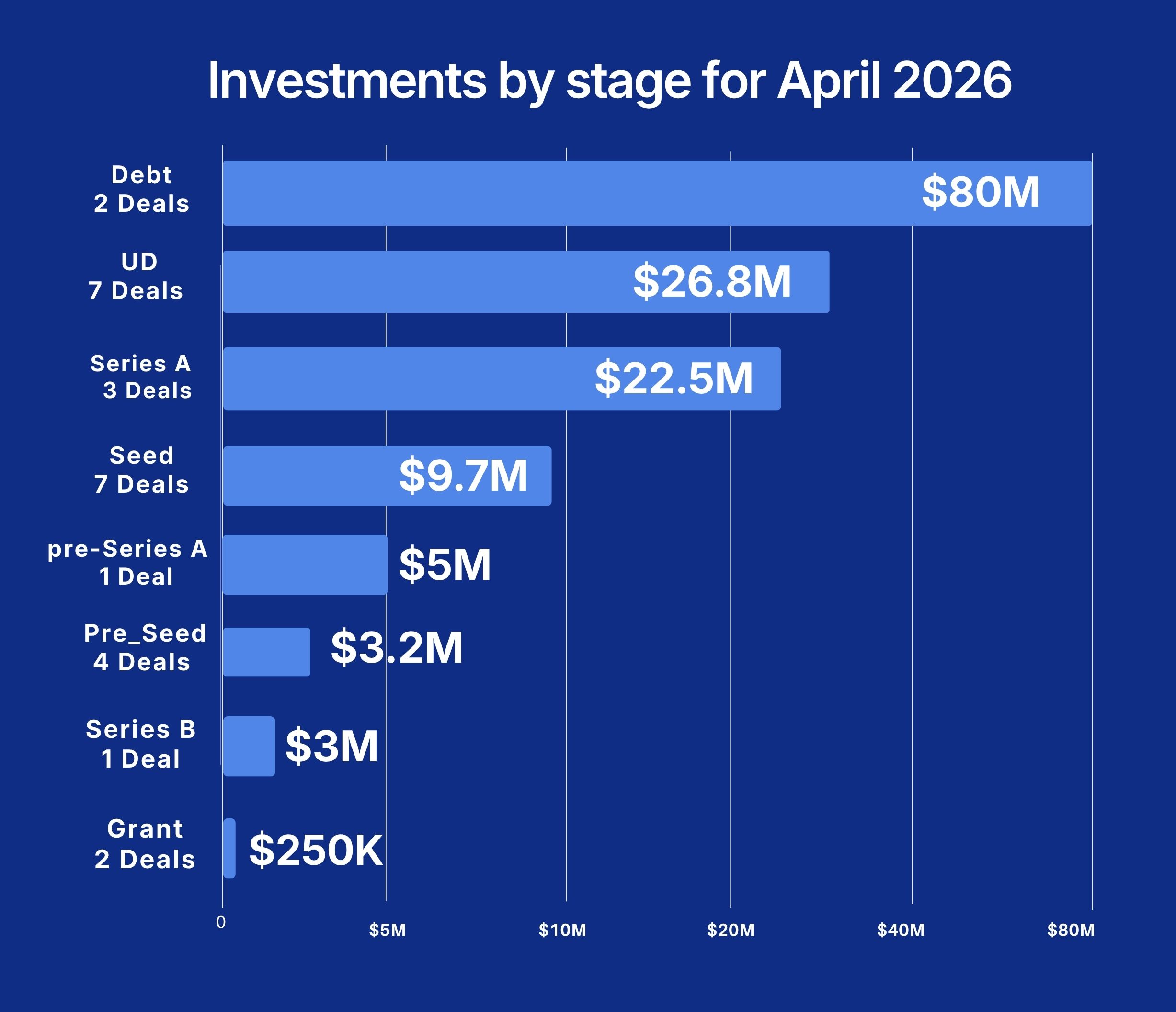
The dominance of debt, accounting for $80 million across just two deals, signals that investors are still hedging risk, opting for capital structures that offer downside protection. At the same time, early-stage startups captured the bulk of deal activity, with 17 companies raising a combined $40.6 million, reflecting a continued appetite for long-term bets, albeit in smaller cheque sizes.
Only one later-stage transaction was recorded during the month, backing Egypt’s Lucky, reinforcing the slowdown in growth-stage equity deployment.
UAE leads again as regional capital concentrates
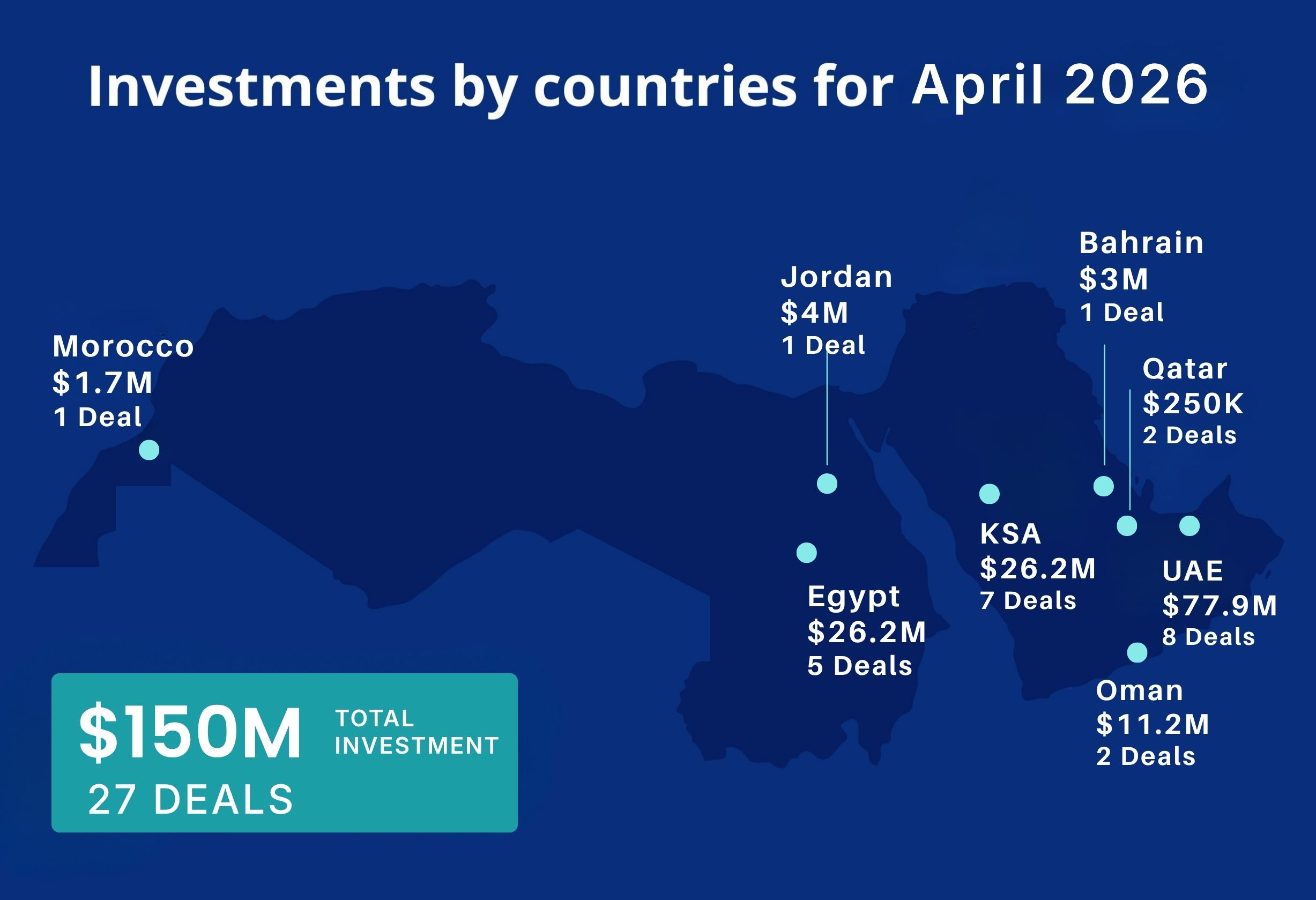
The United Arab Emirates maintained its position as the region’s primary capital hub, attracting $78 million across eight deals, or 52% of total funding.
Saudi Arabia followed with $26.2 million raised by seven startups, while Egypt came close behind with a similar funding level spread across five transactions.
Elsewhere, smaller Gulf markets showed renewed activity. Oman, Bahrain, and Qatar collectively raised $14.5 million through five deals, pointing to a broader, if still modest, regional recovery.
Fintech dominates, e-commerce re-enters the picture
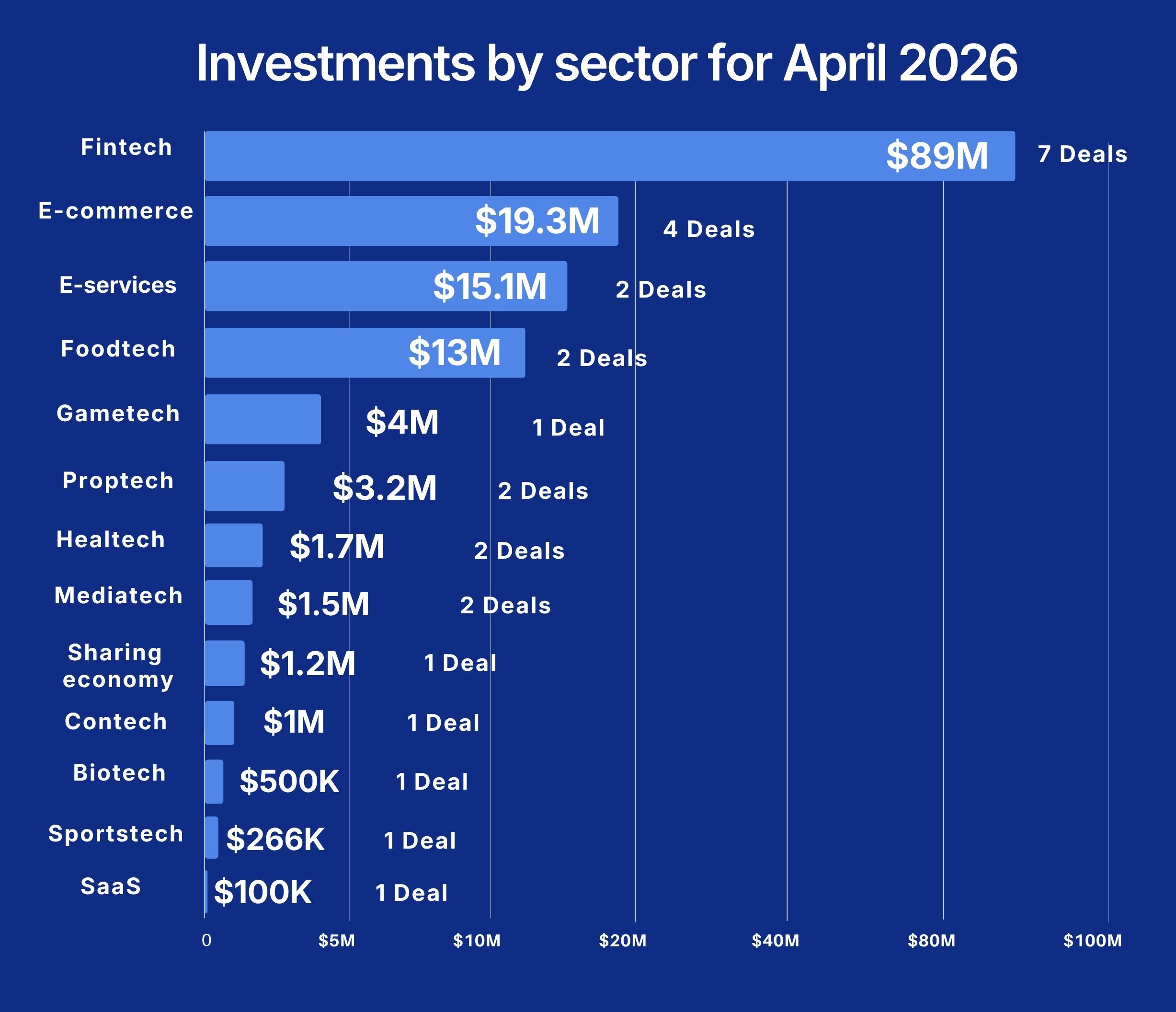
Financial Technology continued to attract the largest share of capital for the fourth consecutive month, raising $89.4 million across seven deals. The sector’s resilience reflects its alignment with both enterprise demand and financial infrastructure plays, which tend to perform better in uncertain environments.
Electronic Commerce staged a notable comeback after dropping off in March, securing $19.3 million across four transactions.
Online services followed with $15 million invested in two startups, while Food Technology attracted $13 million across two deals, maintaining steady investor interest.
B2B models capture the bulk of capital
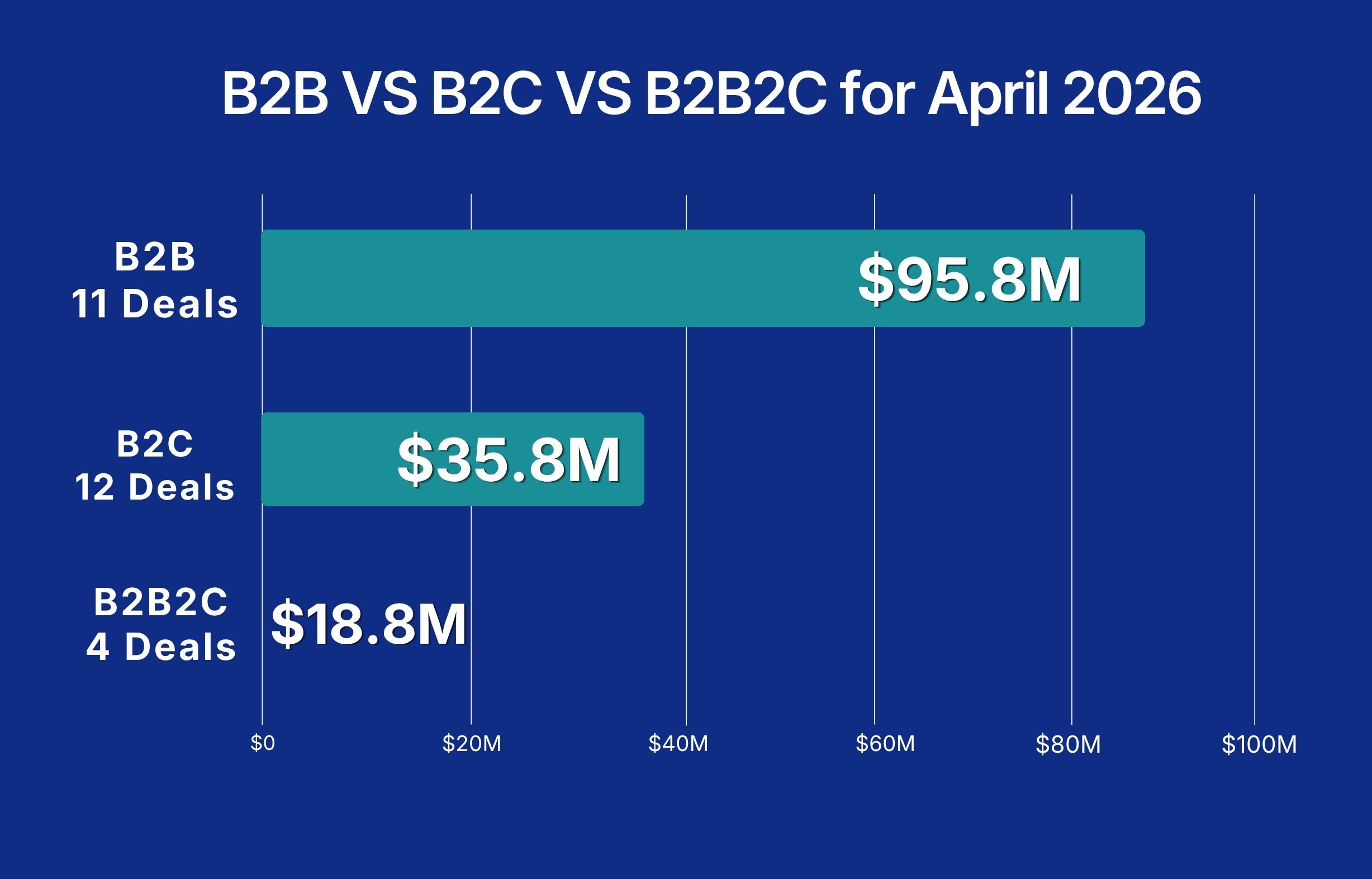
Business-focused startups continued to dominate capital allocation. B2B companies raised $95.8 million across 11 deals, significantly outpacing B2C startups, which secured $35.8 million through 12 transactions.
The shift reinforces a broader trend: in uncertain cycles, investors favour predictable revenue streams, enterprise contracts, and infrastructure-layer businesses over consumer-driven growth models.
Female funding returns, but gap persists
After two months of absence, female-led startups reappeared on the funding map, raising $1.5 million across five deals.
However, the imbalance remains stark. Male-founded startups captured $138.8 million across 19 transactions, while mixed-gender founding teams raised $10 million across three deals.
What this really means
What April really signals is not a rebound, but a market that has found a temporary floor.
Since then, the flow of smaller deals across the region, particularly in fintech and early-stage rounds, suggests investors are cautiously re-entering, but on very controlled terms. Weekly activity hasn’t disappeared, but it has become more selective, with capital clustering around financial infrastructure, AI-adjacent models, and businesses tied to regulatory or institutional demand.
At the same time, the broader picture hasn’t fundamentally changed. Q1 closed with funding down 37% year-on-year amid ongoing geopolitical pressure, and deal volumes have thinned even as capital has held up. What this means is that April’s uptick is less about renewed confidence and more about investors adjusting their pace rather than stepping away entirely.
There’s also a clearer divergence now between global and regional cycles. While global capital is concentrating in massive AI-led bets, the MENA market is moving in the opposite direction, favouring smaller, more defensible plays and alternative structures like debt.
So the takeaway is more nuanced than a recovery narrative. The market is active again, but it is operating with a different logic. Capital is available, but only for models that can align with where risk tolerance has shifted.
This is no longer a “wait and see” phase. It’s a “deploy carefully” phase.