
Bekia secures $765,000 to launch B2B recycling platform
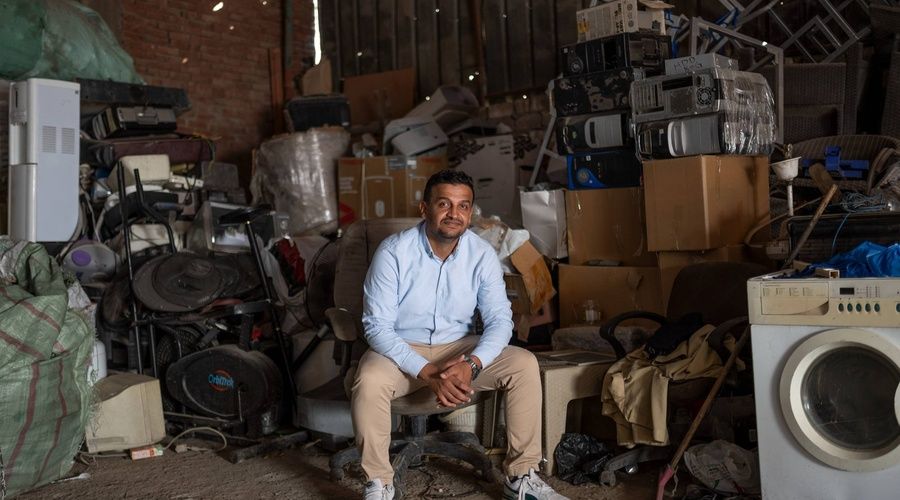
- Egyptian recycling technology startup Bekia has raised $765,000 in Seed funding, led by Madica, the Africa-focused investment programme affiliated with Flourish Ventures, with follow-on investment from Catalyst Fund and participation from Dakar-based Jambaar Capital.
- Founded in 2019 by Alaa Afifi, Bekia digitises waste collection by connecting households with collectors through its platform, recording the weight, grade and payment for collected materials and creating a traceable supply of recyclable waste for businesses and factories.
- The startup says it has diverted more than 25,000 tonnes of waste from landfill, served over 100,000 customers, and enabled more than 2,400 people to earn through its network, while growing more than sevenfold since 2023.
- Bekia will use the funding to expand its engineering team, launch its first B2B software product, Bekia Next, and begin testing its model in a second African market.
Press release:
Bekia, an Egyptian startup digitising waste collection, has raised a $765,000 seed round to deepen its consumer app and launch its first B2B software product, as Egypt pushes to lift its municipal recycling rate to 60% by 2027.
Madica, the Africa-focused investment programme affiliated with Flourish Ventures, led the round. Catalyst Fund, the pan-African climate investor that first backed Bekia in 2023, re-invested, with participation from Dakar-based Jambaar Capital.
The raise lands in a market under regulatory pressure. Egypt produces about 60,000 tonnes of municipal waste a day, most of it going into open dumps rather than a recycling plant, and the government is targeting a 60% municipal recycling rate by 2027, up from around 37% in 2024. Almost all collection that happens today runs through an informal trade operating without contracts, licences or records.
Bekia said it will use the funding to grow its engineering team, take Bekia Next to market, and begin testing the model in a second African market.
"Egypt's recycling sector has always worked — it just worked invisibly, on cash and trust, with no record of any of it," said Alaa Afifi, Founder and CEO of Bekia. "We built the software layer that changes that: a collector gets a transaction history, a factory gets traceable supply, a household learns what its waste is actually worth. The material itself is a commodity, but the record of it isn't, and nobody in our market owns that record yet."
Founded in 2019 by Afifi, a computer science graduate of Cairo University, Bekia began with a consumer app: a household books a pickup, a collector arrives at a scheduled time, material is weighed on the spot at a published rate, and payment goes to a bank account or digital wallet. The market, in Afifi's view, never
lacked demand for recyclable material — it lacked anything connecting the households holding it to the factories that want it.
Every collection is recorded: supplier, weight, grade, payment. At the end of October, Bekia will launch Bekia Next, which turns that data into verified CO₂-avoidance certificates for corporate clients using established international carbon accounting methodology. It is the first thing Bekia sells as a subscription rather than a service.
Bekia competes with traditional contractors, who move material but cannot document it, and with the informal collectors handling most of Egypt's recyclable volume. It has diverted more than 25,000 tonnes from landfill and served over 100,000 customers, 97% of them women, with more than 2,400 people earning through its network. Enterprise retention is above 95%, and the company has grown more than sevenfold since 2023. Revenue comes from enterprise contracts, household collections and refurbished electronics, which generated its first revenue in June 2026.
"What excites us about Bekia is how the team is drawing on its firsthand understanding of waste collection in Egypt to build a more interconnected, tech-driven ecosystem serving households, small businesses and large industrial waste producers," said Emmanuel Adegboye, Head of Madica. "We're proud to welcome them to the Madica program and support that ambition with long-term capital, company-building expertise and networks."
"We were among the earliest investors to believe in Alaa and his vision for transforming Egypt's recycling ecosystem," said Maxime Bayen, Partner at Catalyst Fund. "Since then, Bekia has grown more than 7x while building a stronger B2B-led platform that diverts waste from landfill and formalizes a fragmented waste sector. Our decision to re-invest reflects our conviction that Bekia can become critical climate infrastructure for Egypt and the region."
"Bekia is one of the clearest examples we have seen of a business where commercial growth and impact creation are structurally the same thing," said July Andraous, Managing Partner at Jambaar Capital. "Alaa and his team are building an important infrastructure layer in Egypt's recycling economy: a formal, technology-enabled route to market that gives informal collectors fair prices, gives households a rewarding way to recycle, and gives corporates the traceability data they increasingly need. We invested because the traction is real and the unit economics are improving."
As reporting obligations tighten on the multinationals operating in Egypt, Afifi expects the companies that can prove what became of their waste to be worth more than the ones that merely took it away.