
Inside CoinMENA’s exit: The $240m deal that redefined MENA crypto’s growth model
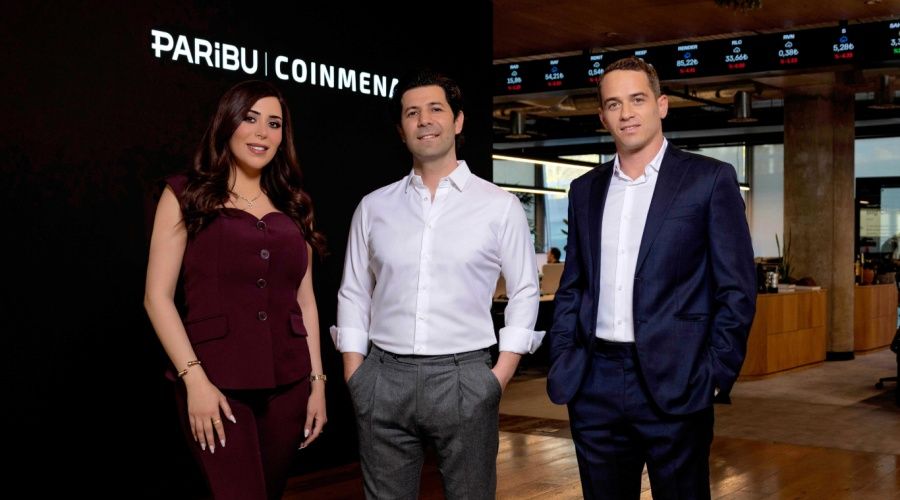
CoinMENA’s sale to Paribu crystallises a quiet shift in how value is being priced in MENA’s digital asset market. The Bahrain- and Dubai-licensed exchange reached a reported valuation of up to $240 million after raising roughly $20 million in total funding without closing Series A, at a time when regulatory licences have become more common and competition has intensified. The deal suggests that strategic buyers are no longer paying for scale or fundraising momentum but for businesses that convert regulatory access, cost control, and focused execution into predictable revenues and clean balance sheets.
In a regional crypto market shaped by aggressive fundraising, inflated paper valuations, and sharp reversals across cycles, CoinMENA’s exit offers a clearer signal of what strategic buyers are actually willing to pay for.
This was not a scale-driven outcome. It was a capital-structure decision.
A deliberate decision to exit before the regulatory premium eroded
CoinMENA entered the UAE market early. When the company secured its VARA licence, only two crypto firms had done so. Today, more than 40 entities are licensed. That shift materially altered the company’s strategic calculus.
“My job as CEO is towards my shareholders,” Talal Tabbaa said. “They trusted me with their money, and my responsibility is to maximise value for them.”
As regulatory access moved from scarcity to baseline, CoinMENA faced a familiar late-stage choice: raise a large round at a higher valuation and commit to years of growth to justify it, or monetise its position while its regulatory credibility, revenue base, and operational profile still translated into a clean acquisition premium.
CoinMENA opted for the latter.
“We had the option of doing a pretty big Series A with one of the leading companies in crypto,” Tabbaa said. “But we decided not to do it. We were in a unique position to get a win for the team, a win for the investors, and a win for the buyer.”
That decision was underpinned by restraint. CoinMENA never allowed its valuation to drift into speculative territory. “The highest valuation we ever did was less than $100 million,” Tabbaa said, noting that this discipline ultimately expanded the pool of credible acquirers and allowed the deal to be structured around revenue multiples rather than future promises.
The outcome was unusually clean by regional standards: all investors exited in cash, employees benefited from a sizeable ESOP allocation representing roughly 18% of the company, and the buyer avoided inheriting a distorted cap table.
Capital discipline as a strategic lever
CoinMENA’s founders were explicit about one thing: capital alone does not build durable crypto businesses.
“During bull cycles, companies are often tempted to expand spending faster than fundamentals justify,” Tabbaa said. “We were very responsible with our spending.”
Rather than scaling headcount and cost structures in line with peak-market assumptions, CoinMENA maintained tight internal controls. “We calculate our P&L on a daily basis,” he said. “We never did mass layoffs.”
That discipline preserved optionality when market conditions turned. While others were forced into retrenchment, CoinMENA remained operationally intact, avoiding the reputational and organisational damage that often accompanies rapid contractions.
Founder ownership also played a role. CoinMENA’s leadership retained meaningful equity throughout the company’s lifecycle, aligning incentives tightly with long-term outcomes.
Tabbaa argued that crypto exchanges are difficult to scale without founders retaining meaningful ownership, as alignment and long-term commitment tend to weaken when leadership is detached from equity stakes.
The model required a high level of intensity. “In the early days, we were working 16- or 18-hour days during bull markets,” he said. “Someone who’s just collecting a salary won’t do that consistently.”
Focus over expansion
Product strategy followed the same logic.
Rather than expanding horizontally across multiple crypto-adjacent products, CoinMENA narrowed its scope and executed deeply on its core exchange offering. “We did one thing, but we did it better than everyone else,” Tabbaa said.
That focus reduced operational risk, limited regulatory exposure, and strengthened trust with banking partners and users. Over time, it translated into a platform serving more than 1.5 million CoinMENA serves users in 45 countries, supports over 50 cryptocurrencies, and accommodates multiple local currencies, all while maintaining its balance sheet.
In a sector prone to chasing short-term volume, CoinMENA’s restraint proved more valuable than breadth.
What the deal actually signals
CoinMENA’s acquisition does not suggest that MENA’s crypto market rewards conservatism for its own sake. It demonstrates that strategic buyers are valuing coherence in their acquisitions.
Exchanges built on inflated valuations, fragile cost bases, or diffuse product strategies struggle to convert scale into exit value. Those that align capital structure, ownership, regulation, and focus across cycles retain strategic optionality.
CoinMENA monetised that option at a moment when its regulatory credibility still carried weight, its revenues were defensible, and its balance sheet remained clean.
“Timing matters,” Tabbaa said. “Luck and timing are big parts of business, and any founder who denies that is arrogant.”
But timing alone was not enough. What ultimately differentiated the company was its refusal to confuse fundraising with value creation.
Operating, not stepping aside
Post-acquisition, CoinMENA will continue operating under Tabbaa’s leadership as part of Paribu’s regional expansion strategy.
“I’m not going into an advisory role,” he said. “I’m remaining as CEO. I’m more motivated than ever to take this to the next stage.”
Looking ahead, Tabbaa expects consolidation in digital assets to broaden beyond exchanges into payments, brokerage infrastructure, and regulated financial services. As institutional flows and stablecoin usage accelerate across emerging markets, infrastructure—not hype—is likely to attract the next wave of capital.
For founders and investors watching the sector, CoinMENA’s exit delivers a clear, if uncomfortable, lesson: in MENA’s crypto market, discipline compounds longer than capital.