
The Middle East’s butterfly effect on the global economy
For years, the Gulf has quietly become one of the most influential forces shaping the global economy.
This influence extends not only to energy but also to capital and, increasingly, to talent.
GCC sovereign wealth funds today control more than $4.9 trillion in assets, with projections to exceed $7 trillion by 2030, positioning them among the world’s most powerful allocators of capital. At the same time, cities like Dubai, Riyadh, Abu Dhabi, and Doha have evolved into hubs attracting global founders, engineers, and operators building companies that scale across regions.
This is no longer a region that simply fuels the global economy. It is one that finances it, builds within it, and increasingly shapes its direction.
And yet, it is also the region where a single month of conflict has managed to do what five years of war elsewhere could not: disrupt the global system at its core.
One month vs five years
The war in Europe has stretched over five years. It has reshaped energy flows, disrupted grain exports, and pushed inflation higher. Yet the global economy adapted. Supply chains rerouted. Energy imports diversified. Markets stabilised over time.
Now compare that to the past few weeks in the Middle East.
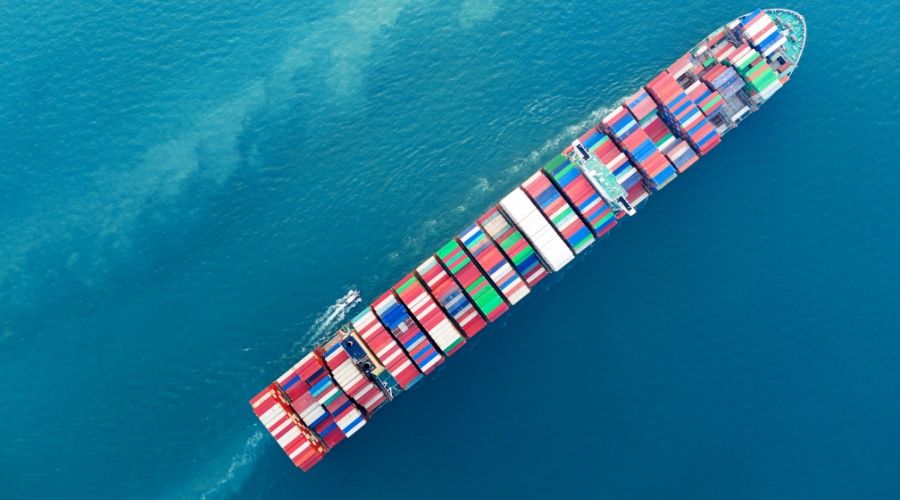
The Strait of Hormuz, through which around 20 million barrels of oil per day flow, nearly 20% of global consumption, saw shipping activity decline sharply as tensions escalated. Oil prices moved above $100 per barrel. Insurance costs surged. Governments responded by releasing hundreds of millions of barrels from strategic reserves to stabilise markets, according to the IEA.
What triggered this reaction was not an actual supply collapse.
It was the possibility of one.
A system built on narrow corridors
The global economy’s sensitivity to the region is not new.
In 2021, when the Suez Canal was blocked for just six days following the grounding of the Ever Given, an estimated 12% of global trade was disrupted, delaying nearly $9–10 billion worth of goods per day. Supply chains stalled across continents, and the aftershocks lasted for months.
That incident was accidental, temporary, and resolved within a week.
Yet it exposed how much of global trade depends on a handful of chokepoints concentrated in and around the Middle East.
Capital, technology, and systemic exposure
What makes the current moment more consequential is how deeply the region is now embedded across multiple layers of the global economy.
Gulf sovereign wealth funds are among the most active global investors. According to Global SWF, Middle Eastern funds have accounted for a significant share of sovereign deal activity in recent years, particularly in technology, infrastructure, and energy transition sectors. Their decisions influence valuations, funding cycles, and the pace of innovation globally.
This influence is visible across the technology landscape.
Saudi Arabia’s Public Investment Fund (PIF) has backed companies such as Uber and Lucid Motors while also deploying capital to global gaming and digital platforms. It is also a key backer of the SoftBank Vision Fund, which has invested in leading AI companies, including OpenAI, alongside global institutional investors.
Abu Dhabi’s Mubadala has invested in GlobalFoundries, anchoring its position in the semiconductor value chain while expanding into AI, healthcare, and advanced technologies. G42, backed by Abu Dhabi capital, has emerged as a major AI player with partnerships spanning cloud infrastructure and machine learning ecosystems.
Across the region, Gulf capital has also found its way into platforms such as X (formerly Twitter) through broader investment vehicles and co-investment structures, reflecting its growing exposure to global digital infrastructure and information networks.
Meanwhile, Qatar Investment Authority continues to hold positions in global companies such as Volkswagen and Barclays, alongside technology-enabled businesses that shape industrial and financial ecosystems.
This is not passive capital.
It is capital that participates directly in building the technologies, platforms, and infrastructure that underpin the global economy.
At the same time, the region’s startup ecosystems are maturing. MENA has seen billions in venture funding over recent years, with increasing cross-border expansion and global investor participation. Governments are investing heavily in AI strategies, digital infrastructure, and talent development, positioning the region as both a market and a builder within the global tech economy.
The result is a layered exposure.
Instability in the region no longer affects a single sector. It touches energy flows, capital allocation, and technological development simultaneously.
The cost of a longer war
If the conflict continues, the risks shift from short-term volatility to structural strain.
Sustained pressure on energy markets would feed directly into global inflation, complicating monetary policy for major economies. Higher shipping and insurance costs would increase the price of goods, affecting supply chains that remain sensitive after years of disruption.
The World Bank has warned that major disruptions in energy supply corridors can contribute to material slowdowns in global growth, particularly for import-dependent economies.
Capital flows would also respond.
Periods of geopolitical instability tend to delay large-scale investments and reduce risk appetite. Venture funding cycles could slow. Infrastructure and cross-border expansion plans may be postponed. For a region positioning itself as a global investment and innovation hub, prolonged instability risks slowing momentum at a critical inflection point.
More broadly, the erosion of predictability becomes the underlying issue.
Modern economic systems are built on precision—on timing, cost efficiency, and planning. When uncertainty persists, those systems become less efficient, more expensive, and harder to manage.
What this moment makes clear
The past month has revealed a reality that often goes unnoticed: the Middle East is not interchangeable with other regions. Its role is structural.
The global economy can adapt to prolonged disruption in some areas. It struggles to function under even short-term instability in the Gulf.
A moment that calls for restraint
The Middle East today sits at the intersection of energy flows, global capital, and emerging innovation ecosystems.
Preserving its stability is not only a regional priority. It is a global one.
The past few weeks have shown how quickly disruption can spread across systems that are deeply interconnected. Extending this trajectory would not only deepen regional uncertainty but also place additional strain on an already fragile global economy.
There is still space for de-escalation.
And there is a shared interest in choosing it.
Because if one month can strain the system this much, the consequences of a prolonged conflict will not be linear.
They will compound.