
The strategic role of GCC sovereign funds in rebuilding post-war economies
An article by Majd Zghyer, a Palestine-based economist.
During the past two decades, the emergence of sovereign wealth funds (SWFs) marked a dramatic shift in the balance of strategic capital and assets, with consequential effects on global financial markets and long-term economic development. Today, SWFs manage approximately $15.8 trillion globally, underscoring their growing influence in shaping cross-border capital flows and strategic investment trends.
Across the Gulf and the wider MENA region, sovereign investors such as the Public Investment Fund, Qatar Investment Authority, Abu Dhabi Investment Authority, and Mubadala have strengthened their positions as some of the world’s most influential institutional investors. Collectively, GCC sovereign wealth funds manage nearly $5 trillion in assets, representing roughly one-third of total global SWF assets under management.
What distinguishes GCC sovereign wealth funds is not only the scale of their capital but also the way they deploy it. Rather than acting as passive custodians of national reserves, these institutions have evolved into forward-looking strategic investors, allocating capital across technology, infrastructure, energy transition, artificial intelligence, and innovation ecosystems. In 2023 alone, major GCC SWFs deployed more than $82 billion into global investments, reflecting both their scale and growing sophistication.
Yet while these funds have expanded their global footprint from Silicon Valley to Asian markets, they also possess the capital, institutional expertise, and long-term investment horizons required to pursue a more active role closer to home. One anchored not only in financial returns but also in regional economic resilience and stability.
At a time when geopolitical uncertainty is making global capital more cautious and fragmented, regional sovereign investors are uniquely positioned to shape the Middle East’s next chapter of economic transformation. For GCC sovereign wealth funds, investing in fragile regional economies is no longer simply a political or humanitarian consideration. It is increasingly becoming a strategic economic imperative.
Turning fragility into opportunity
Unlike traditional investors constrained by short-term cycles, sovereign wealth funds operate with long-term mandates and patient capital strategies that can absorb volatility while pursuing structural returns over decades. This gives them the ability to invest where private capital often hesitates to enter.
In post-crisis environments, investments that rebuild institutions, restore infrastructure, generate employment, and modernise economies can become stabilising forces with a lasting economic impact. For GCC sovereign investors, aligning regional investment strategies with broader national and economic interests reflects a pragmatic approach that combines financial opportunity with long-term regional stability.
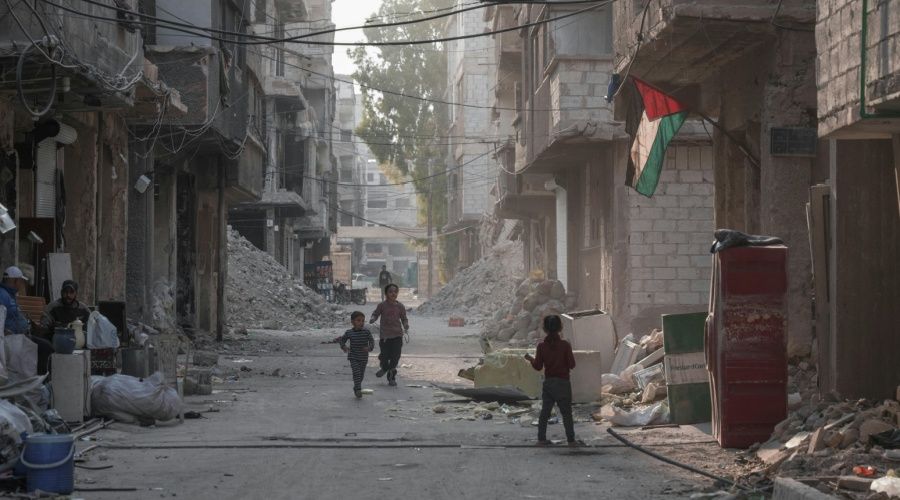
This is particularly relevant in economies such as Palestine, Lebanon, and Syria, where years of conflict, institutional fragility, and infrastructure destruction are reshaping the region’s economic landscape and creating some of the world’s largest reconstruction and recovery needs.
According to the latest joint assessment by the UN, EU, and World Bank, rebuilding Gaza could require more than $71 billion over the next decade. The immediate recovery phase alone is expected to require $26.3 billion during the first 18 months to restore housing, healthcare systems, education facilities, and essential infrastructure. Lebanon’s recovery and reconstruction needs are estimated at approximately $11 billion following years of economic collapse and conflict-related damage. Meanwhile, Syria continues to face one of the largest reconstruction challenges globally after more than a decade of war that devastated infrastructure, industrial capacity, energy systems, and public institutions across large parts of the country.
Collectively, these economies represent not only humanitarian and political challenges, but also a long-term economic test for the region itself. Their recovery will inevitably shape regional trade routes, logistics networks, labour markets, energy connectivity, digital infrastructure, and investment flows across the broader Middle East.
These financing gaps are among the largest reconstruction challenges recorded globally in recent years. However, they also intersect with a region that holds some of the world’s most powerful allocators of strategic long-term capital.
The entry of GCC sovereign wealth funds into fragile regional economies could fundamentally reshape investor sentiment. In markets where capital scarcity itself has become a structural risk, sovereign participation can reduce perceived risk, restore confidence, and attract broader pools of institutional and private investment.
When sovereign investors become anchor partners in reconstruction initiatives alongside development finance institutions and international investors, they can unlock investment flows that may otherwise remain inaccessible. More importantly, such investments can go beyond rebuilding damaged infrastructure towards modernising economies through new digital infrastructure, trade corridors, logistics networks, energy systems, and technology ecosystems.
This is where the conversation becomes particularly relevant for the region’s startup and innovation economy.
Reconstruction today is not limited to roads, ports, or public utilities. It increasingly includes digital economies, financial infrastructure, AI capabilities, logistics technology, healthtech systems, and SME ecosystems that enable long-term economic productivity. Fragile economies rebuilding after conflict may also become spaces where new economic models, startup ecosystems, and innovation-led industries emerge out of necessity.
For GCC sovereign wealth funds seeking diversification and long-term regional connectivity, this creates a strategic opportunity to support reconstruction not merely as recovery financing, but as an investment in future economic integration across the region.
Palestine, Lebanon, and Syria each possess structural advantages that extend beyond reconstruction narratives, including strategic geographic positioning, highly educated talent pools, entrepreneurial capacity, and strong diaspora networks capable of supporting innovation and business creation across emerging sectors.
The broader narrative, therefore, should move beyond traditional philanthropy towards a disciplined and forward-looking investment strategy that recognises that long-term financial returns are increasingly intertwined with regional stability and economic integration.
By allocating even a small share of their multi-trillion-dollar assets towards reconstruction, innovation infrastructure, and private sector recovery in fragile economies, GCC sovereign wealth funds could help shape a more connected and economically resilient Middle East while unlocking transformative long-term opportunities for the region itself.