MENA startup funding plunges 96% to $40 million in October 2026 as megadeals dry up
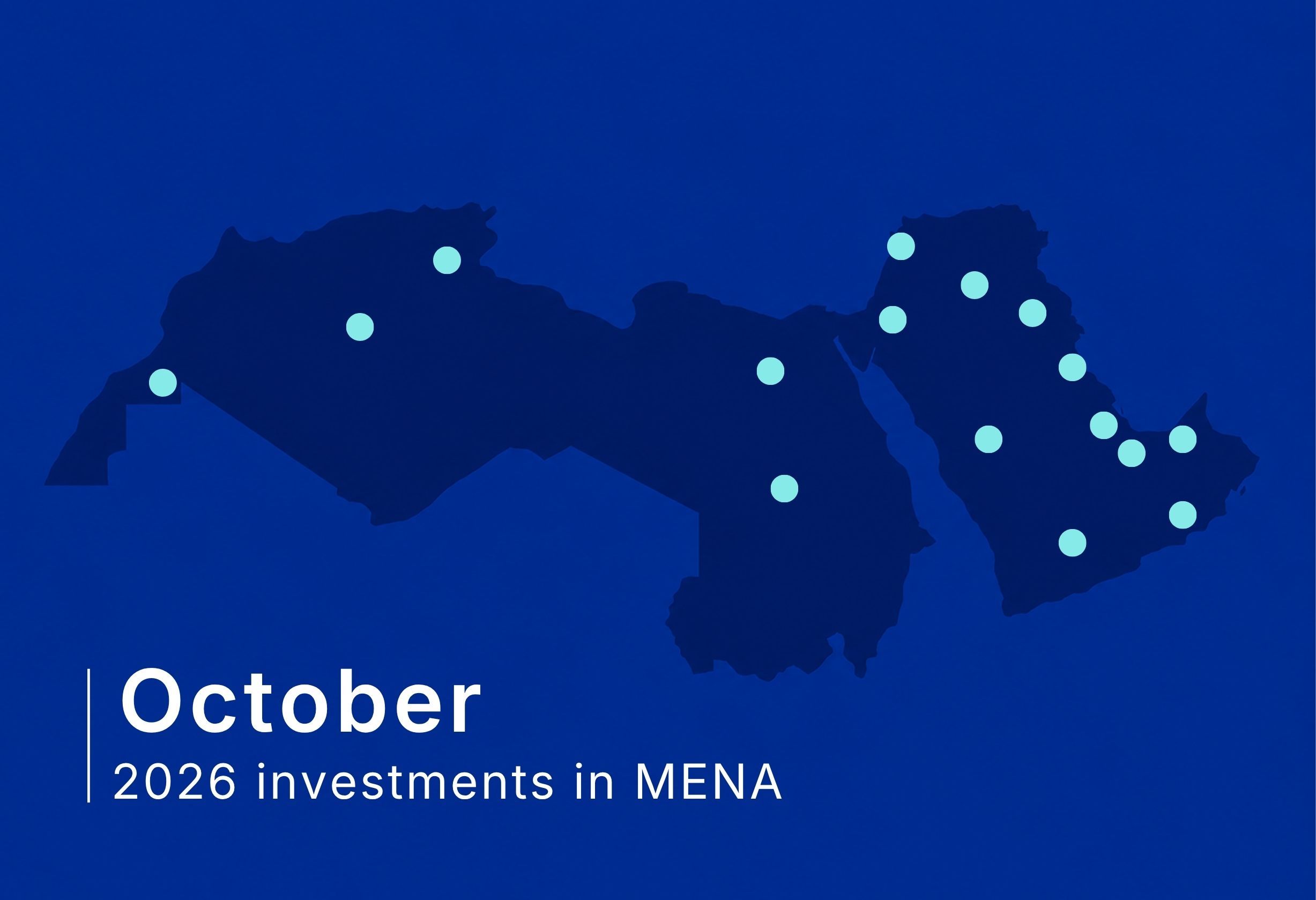
Startup investment across the Middle East and North Africa (MENA) plunged in October 2026, with 32 startups raising just $40 million, as the absence of large funding rounds brought September’s short-lived rebound to an abrupt halt.
The total represents a 96% month-on-month decline from the $1.1 billion raised in September and a 95% drop from the $784.9 million recorded in October 2025, making October one of the weakest months for regional startup funding this year.
The sharp reversal underscores the volatility of MENA’s investment landscape, where a handful of outsized transactions can dramatically reshape monthly funding figures. September’s performance was heavily driven by three Saudi fintech deals worth a combined $762.5 million, accounting for nearly 70% of the month’s total.
October offered a starkly different picture. With no megadeals or later-stage rounds to lift the headline figure, funding remained concentrated in smaller, early-stage transactions, reflecting a more cautious investment environment amid persistent geopolitical and economic uncertainty.
Yet the slowdown was not uniform. Saudi Arabia maintained its lead, fintech continued to attract investor activity, and business-to-business (B2B) startups secured the overwhelming majority of available capital.
Saudi Arabia retains the lead despite funding slump
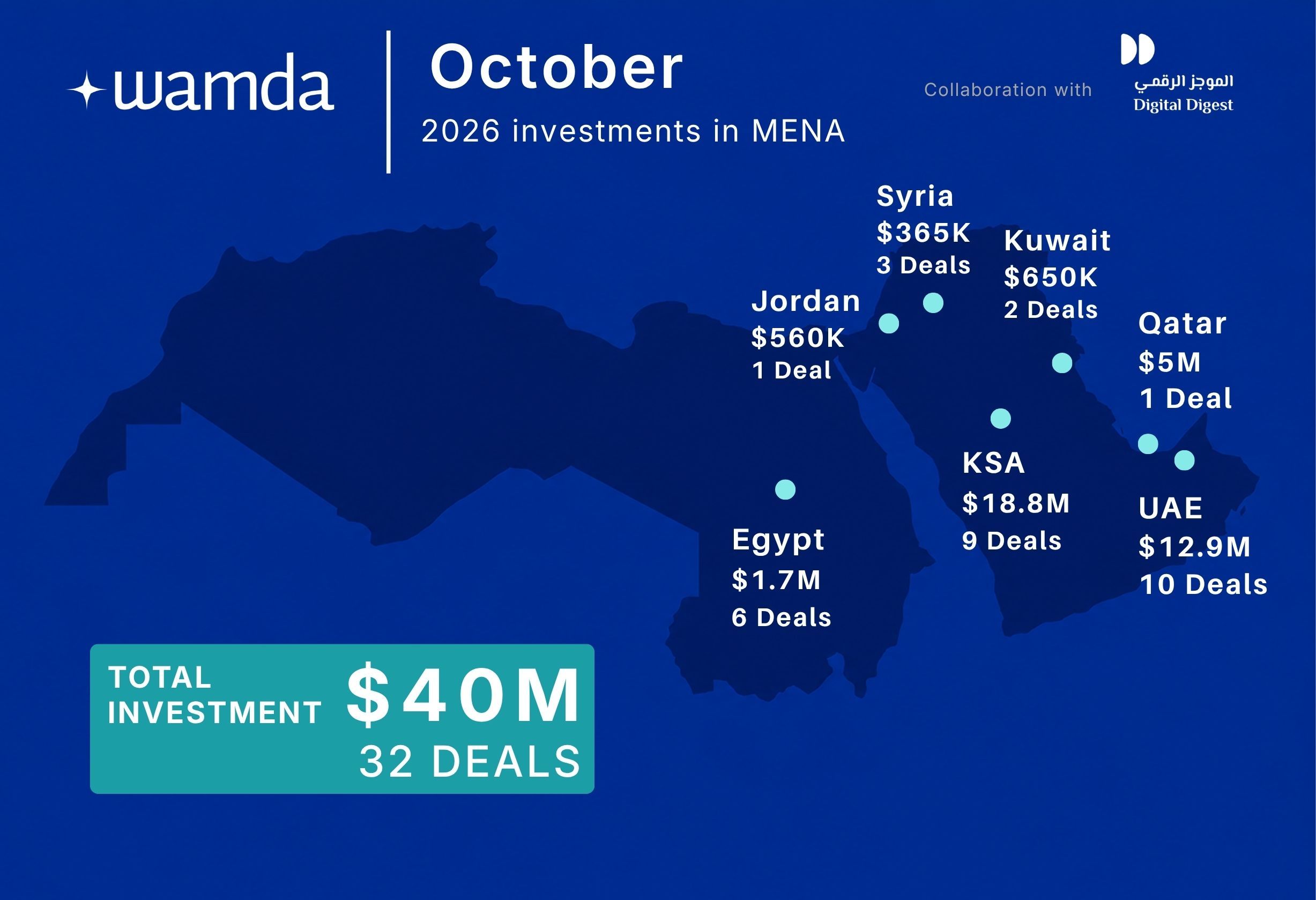
Saudi Arabia remained MENA’s most-funded startup ecosystem in October, with nine startups raising a combined $18.8 million, accounting for 47% of all capital deployed during the month.
The kingdom’s performance was largely driven by Autobia’s $12 million Series A round, which alone represented nearly 64% of Saudi Arabia’s total funding.
The UAE followed in second place, with 10 startups securing $12.9 million. Although the country recorded more transactions than Saudi Arabia, its overall funding remained lower, highlighting the difference between investment activity and deal value.
Qatar climbed to third place with a single $5 million transaction, overtaking Egypt, which slipped to fourth despite recording six deals worth a combined $1.7 million.
Egypt’s performance marked a sharp retreat from September, when seven startups raised $49.2 million, largely supported by Paymob’s $35 million funding round. The October figures point to continued difficulty in attracting sizable investment commitments to one of the region’s largest startup ecosystems.
Further down the rankings, Kuwait secured $650,000 across two deals, followed by Jordan with $560,000 from a single transaction. Syria rounded out the list, with three startups raising a combined $365,000.
The regional distribution highlights a familiar pattern: Saudi Arabia and the UAE continued to dominate funding, attracting nearly 80% of October’s total, while smaller ecosystems accounted for a limited share of investment.
Autobia propels autotech to the top
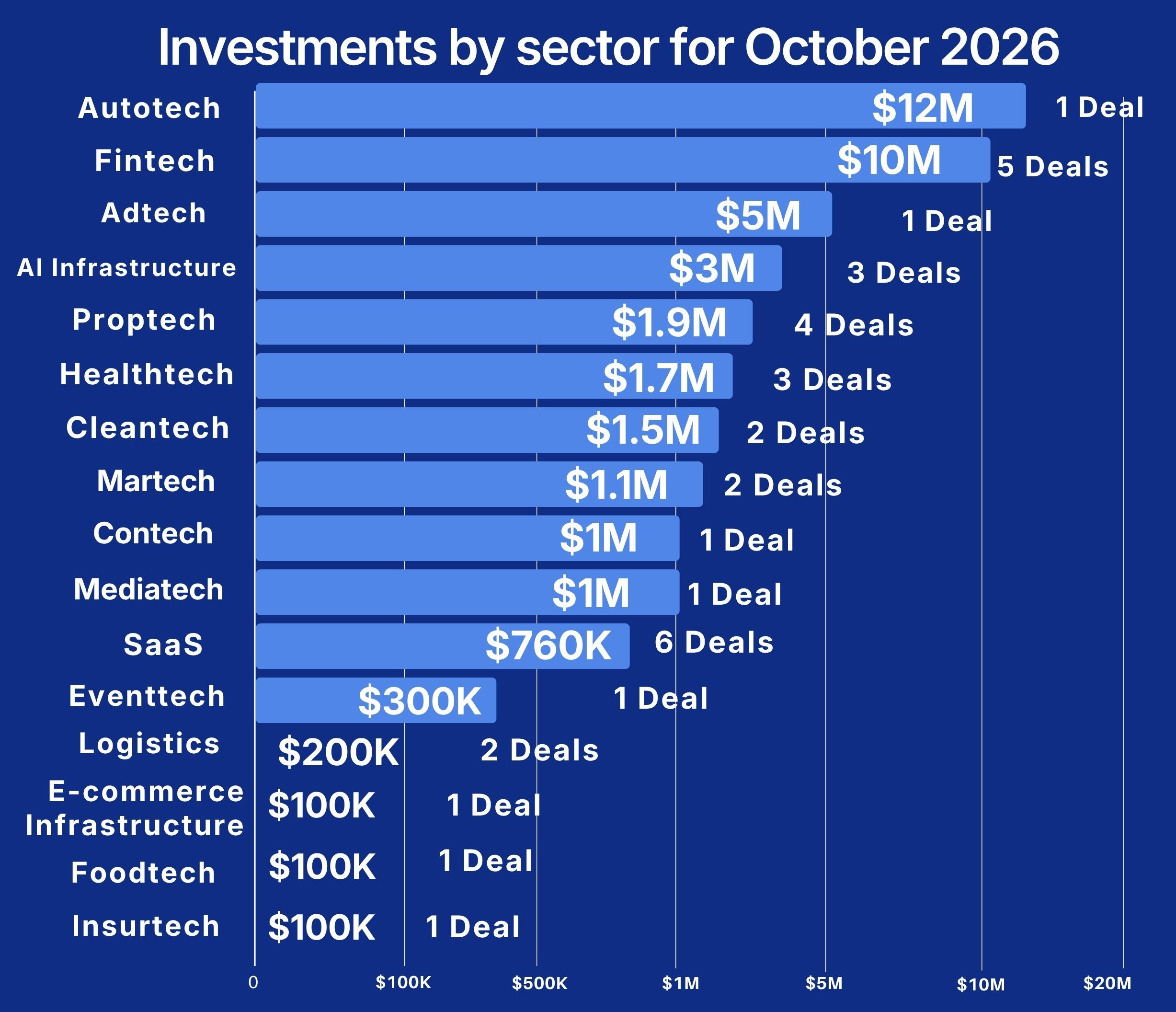
Autotech emerged as October’s most-funded sector, driven entirely by Saudi startup Autobia’s $12 million Series A round.
Fintech ranked second by funding value but remained the most active sector by deal count, with five startups raising nearly $10 million.
The result suggests that investor interest in financial technology has not disappeared, even as the sector moved away from the exceptionally large financing rounds that dominated September.
Adtech came third, attracting $5 million through a single transaction secured by UAE-based JustAd.
Together, the three leading sectors accounted for roughly two-thirds of October’s funding, leaving the remaining capital spread across a broader range of industries.
Megadeals disappear as early-stage funding dominates
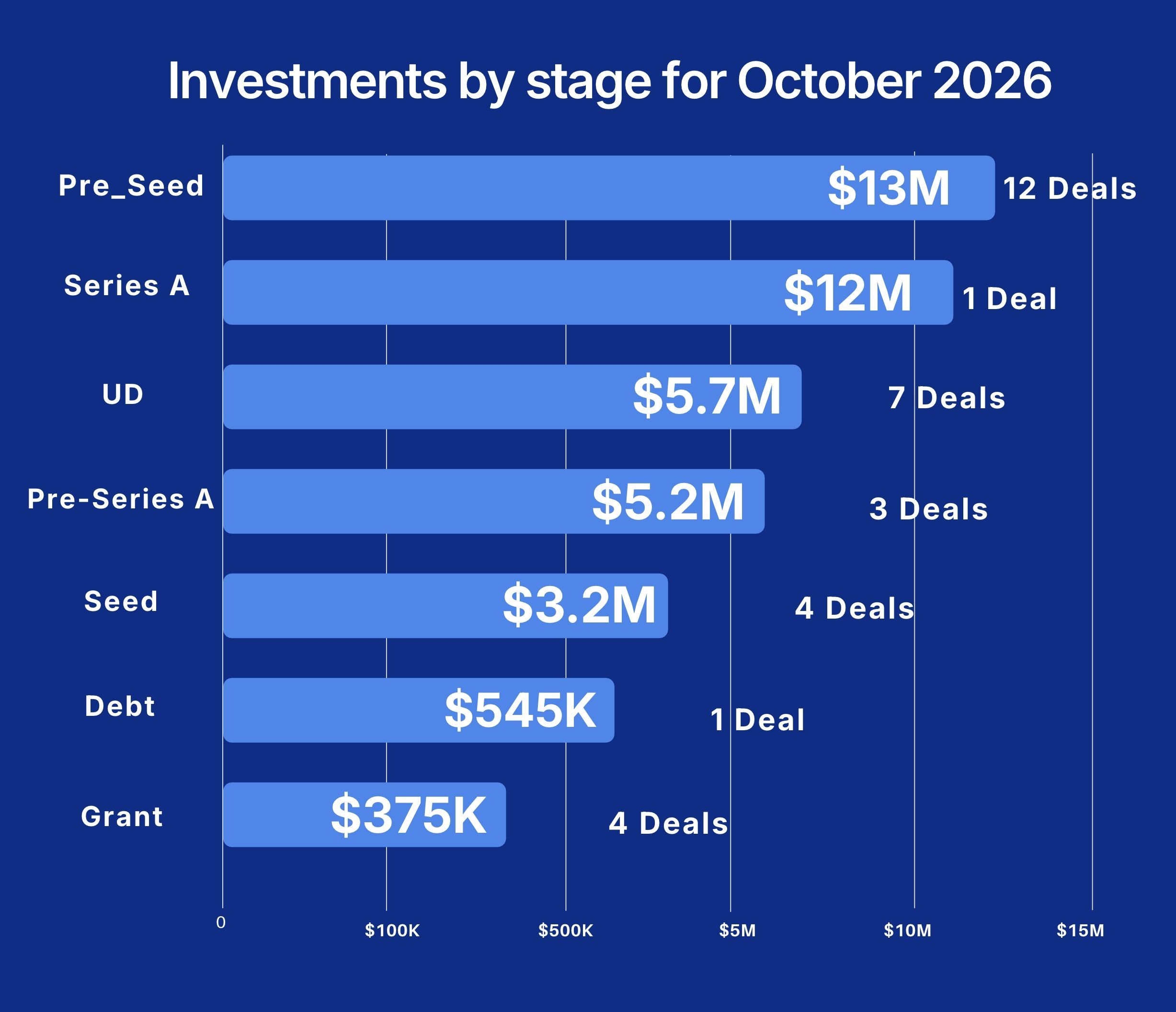
October saw a complete absence of megadeals and later-stage funding rounds, marking a sharp departure from September, when several established startups secured substantial financing.
Instead, early-stage startups dominated both funding value and deal volume, raising $33.7 million across 24 transactions.
That represents more than 84% of all capital deployed during the month and 75% of the total number of deals.
Debt financing played a limited role, accounting for approximately $550,000 through a single transaction, equivalent to just 1.4% of total funding.
Another seven startups raised a combined $5.7 million without disclosing their funding stages.
The shift toward early-stage investment offers a more nuanced view of the slowdown. While larger funding commitments largely disappeared, investors continued to back younger companies, albeit with considerably smaller amounts of capital.
B2B startups capture the majority of funding
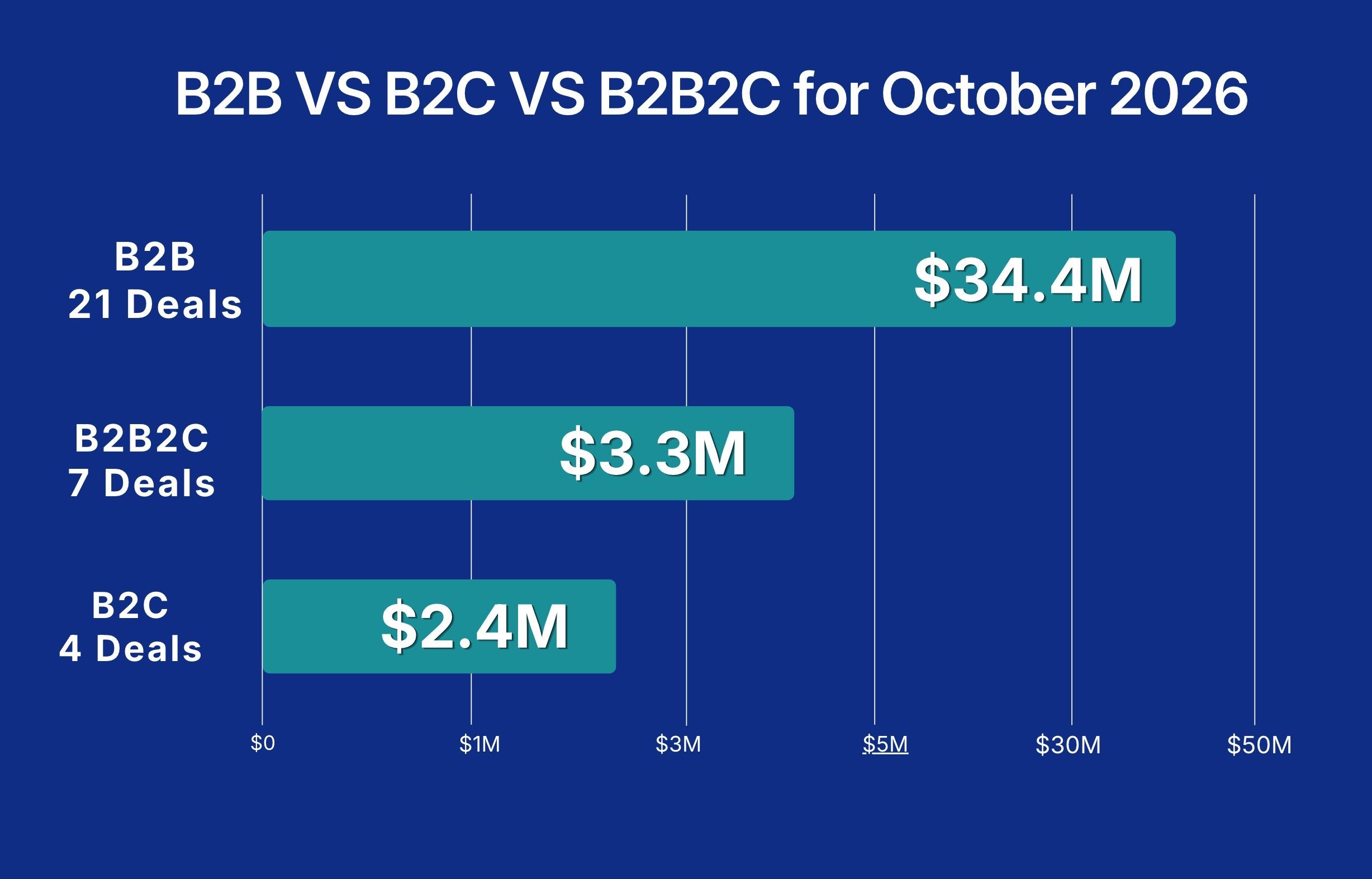
Business-to-business startups maintained their dominance in October, raising $34.3 million across 21 transactions, equivalent to nearly 86% of all capital deployed.
Business-to-consumer (B2C) companies followed at a considerable distance, securing just $2.4 million through four deals.
Startups operating hybrid business models, serving both businesses and consumers, attracted $3.3 million across seven transactions.
The figures reinforce a recurring trend in MENA’s investment landscape, where B2B startups continue to secure the largest share of capital.
Female-founded startups receive just 0.5% of funding
The gender funding gap widened further in October, with male-founded startups capturing 99.5% of all investment, equivalent to approximately $39.8 million across 30 transactions.
Only two funded startups had female founders or mixed-gender founding teams, collectively raising just $200,000.
The disparity is particularly striking given the already limited amount of capital deployed during the month.
Even as investors continued to fund early-stage businesses, female-founded and mixed-gender startups remained largely excluded from the region’s investment activity.
The imbalance extends a persistent trend across MENA. In the third quarter of 2026, male-led startups attracted more than 98% of total funding, while female-led companies secured less than 1%.
A sharp correction, but not the full picture
October’s collapse in startup funding marks a difficult start to the final quarter of 2026, reinforcing concerns about the sustainability of the region’s investment recovery.
The decline comes against a backdrop of geopolitical uncertainty, regional conflict and volatile economic conditions that continue to complicate investment decisions and business planning.
But the magnitude of the month-on-month drop also requires context.
September’s $1.1 billion total was inflated by a handful of unusually large transactions, including substantial debt financing. October’s lack of comparable deals therefore magnified the apparent contraction, making the headline decline more dramatic than the change in deal activity alone might suggest.
Indeed, while total funding fell by approximately 96%, the number of transactions declined by 56%, from 73 in September to 32 in October.
That distinction matters. The region did not experience a complete withdrawal of startup investment. Rather, capital continued to flow into early-stage businesses, while large funding commitments were largely absent.
The more concerning signal is the limited breadth of that activity. Funding remained heavily concentrated in Saudi Arabia and the UAE, a single transaction accounted for 30% of regional investment, and female-founded startups continued to receive a negligible share of capital.
Despite these challenges, MENA startups have attracted approximately $3.4 billion in funding during the first 10 months of 2026, demonstrating that significant capital has continued to reach the ecosystem through a year marked by geopolitical and economic disruption.
The remaining two months will test whether investors regain the confidence to back larger transactions or continue to favour smaller, more selective commitments.
October’s sharp decline may not signal a sustained downturn, but it exposes the fragility of MENA’s funding recovery, which remains heavily reliant on a handful of large transactions rather than broad-based investment activity.
For MENA’s startup ecosystem, the challenge is no longer simply attracting capital. It is building a funding market that can sustain investment beyond the occasional megadeal.
These monthly reports are a collaboration between Wamda and Digital Digest.

