MENA startups raise $173 million in July 2026 as Saudi Arabia regains the lead
MENA startup funding rose modestly in July 2026, but the rebound was largely debt-driven, with equity investment remaining subdued.
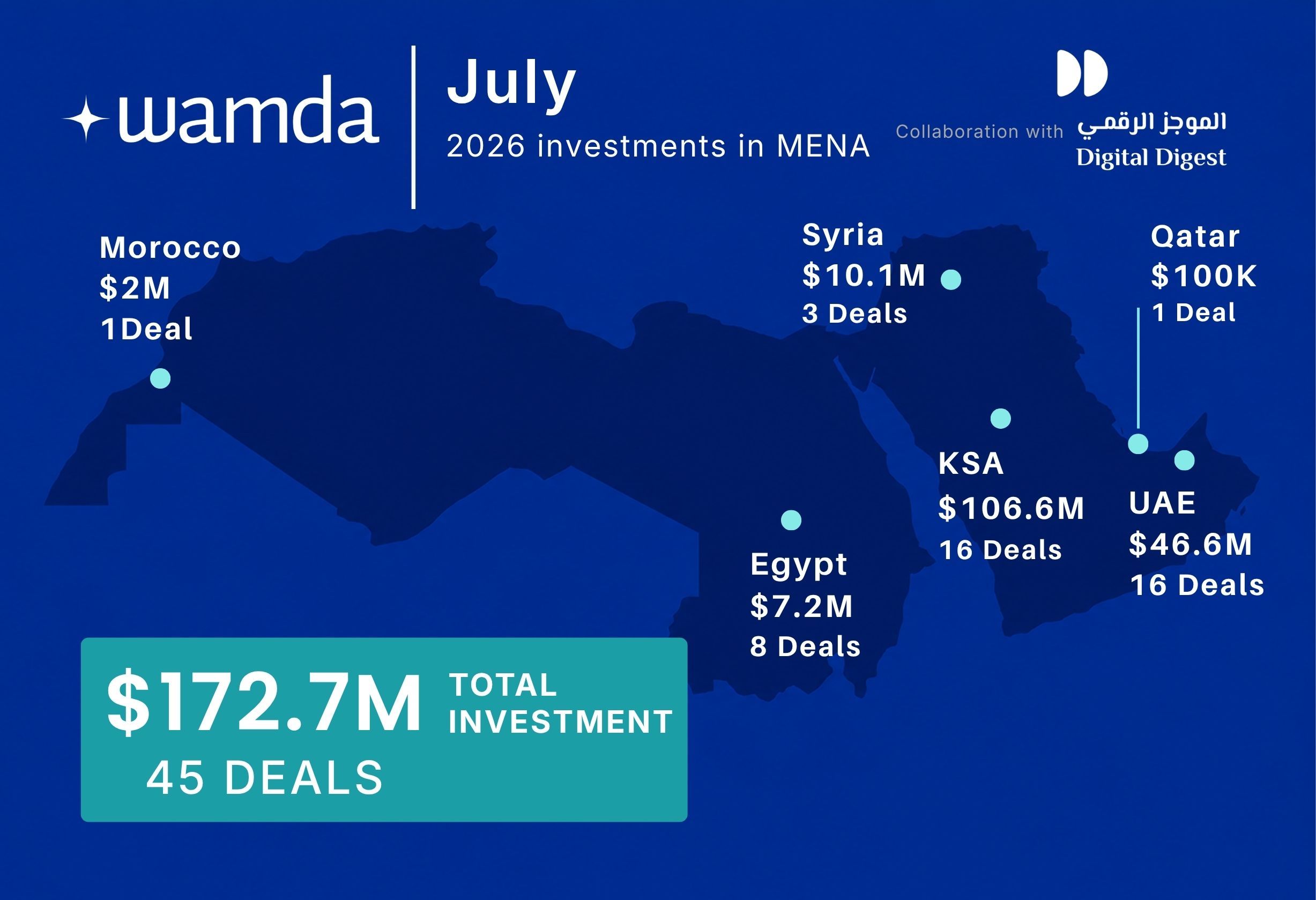
Startups across the Middle East and North Africa raised $172.6 million across 45 deals during the first month of the second half of 2026, up 16% from June but still 78% below the amount recorded in July last year.
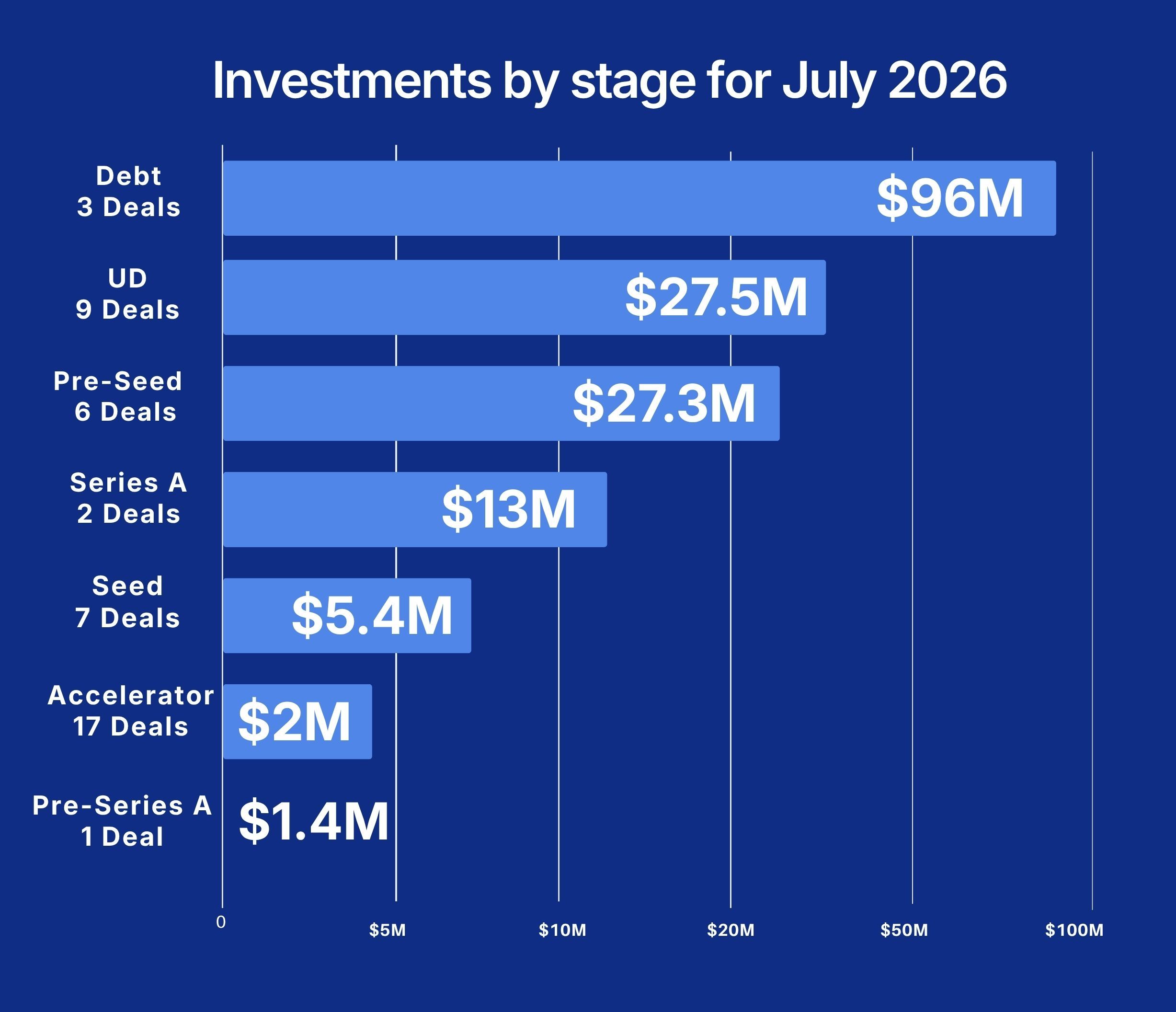
The monthly increase therefore offers only a partial improvement. Debt accounted for 56% of total funding in July, compared with 11.5% in June and just 2% in July 2025.
Saudi Arabia returns to the lead
Saudi Arabia reclaimed the top position in July after failing to lead the regional rankings throughout the first half of the year. Startups based in the kingdom raised $106.6 million across 16 transactions, accounting for nearly 62% of the month’s total funding.
The UAE matched Saudi Arabia’s deal count, with 16 transactions, but ranked second by value after attracting $46.6 million.
Syria emerged as an unexpected third-place market, overtaking Egypt after three startups collectively secured $10.16 million. Egypt, which frequently ranks among the region’s three largest startup markets, raised $7.25 million across eight deals.
Morocco ranked fifth after one startup raised $2 million, while Qatar recorded a single transaction worth an estimated $100,000.
The country distribution, however, remained highly concentrated. Saudi Arabia and the UAE together accounted for almost 89% of all capital raised during the month, leaving the rest of the region with just over $19 million.
E-commerce takes the largest share
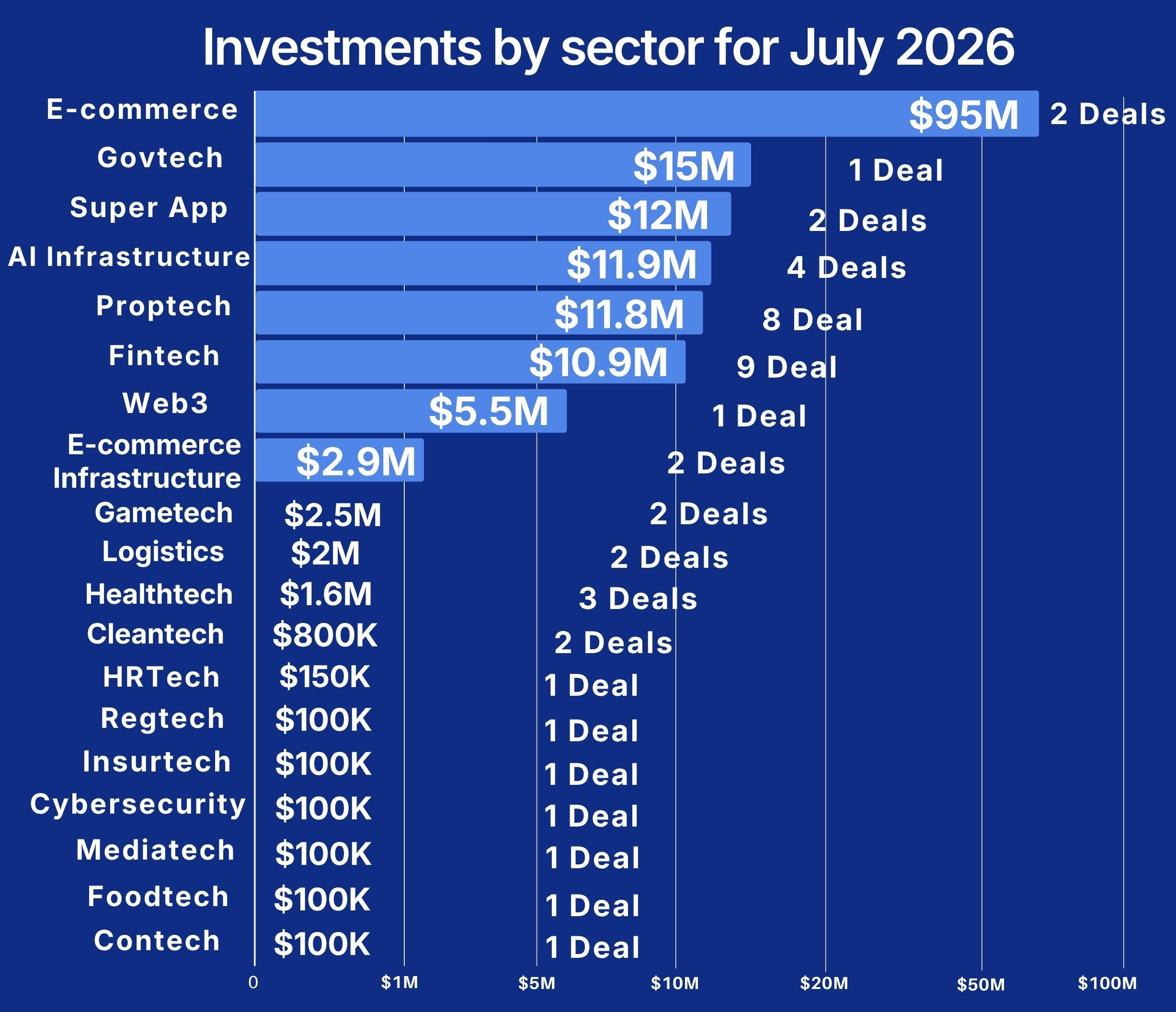
E-commerce returned to the top of the sector rankings in July, attracting 55% of total investment. The result, however, was driven by a limited number of sizeable transactions rather than broad-based activity across the sector.
Govtech ranked second following a $15 million round raised by Whiteshield.
Super apps came third after two startups, one based in Syria and the other in Morocco, collectively raised $12 million.
Despite falling out of the top three sectors by funding value, fintech remained the most active sector by deal count. The sector recorded nine transactions worth a combined $10.9 million, highlighting continued investor appetite for fintech startups despite smaller cheque sizes. Proptech followed closely in terms of deal count, with eight deals that collectively raised $11.9 million.
The sector rankings underline the concentration of July’s investment activity. A small number of transactions shaped the overall picture, while most other sectors attracted comparatively limited capital.
Early-stage rounds dominate
No mega deals or late-stage rounds were announced in July, leaving early-stage startups to dominate both deal value and volume.
A total of 33 early-stage startups raised $49 million, reflecting continued investor preference for smaller cheques and earlier entry points.
Another nine startups did not disclose their funding stages, accounting for $27.5 million that could not be assigned to a specific stage.
While the absence of large late-stage transactions reduced the headline total, the number of early-stage deals suggests that investors remain active at the lower end of the market, albeit with more limited capital commitments.
B2B startups capture most funding
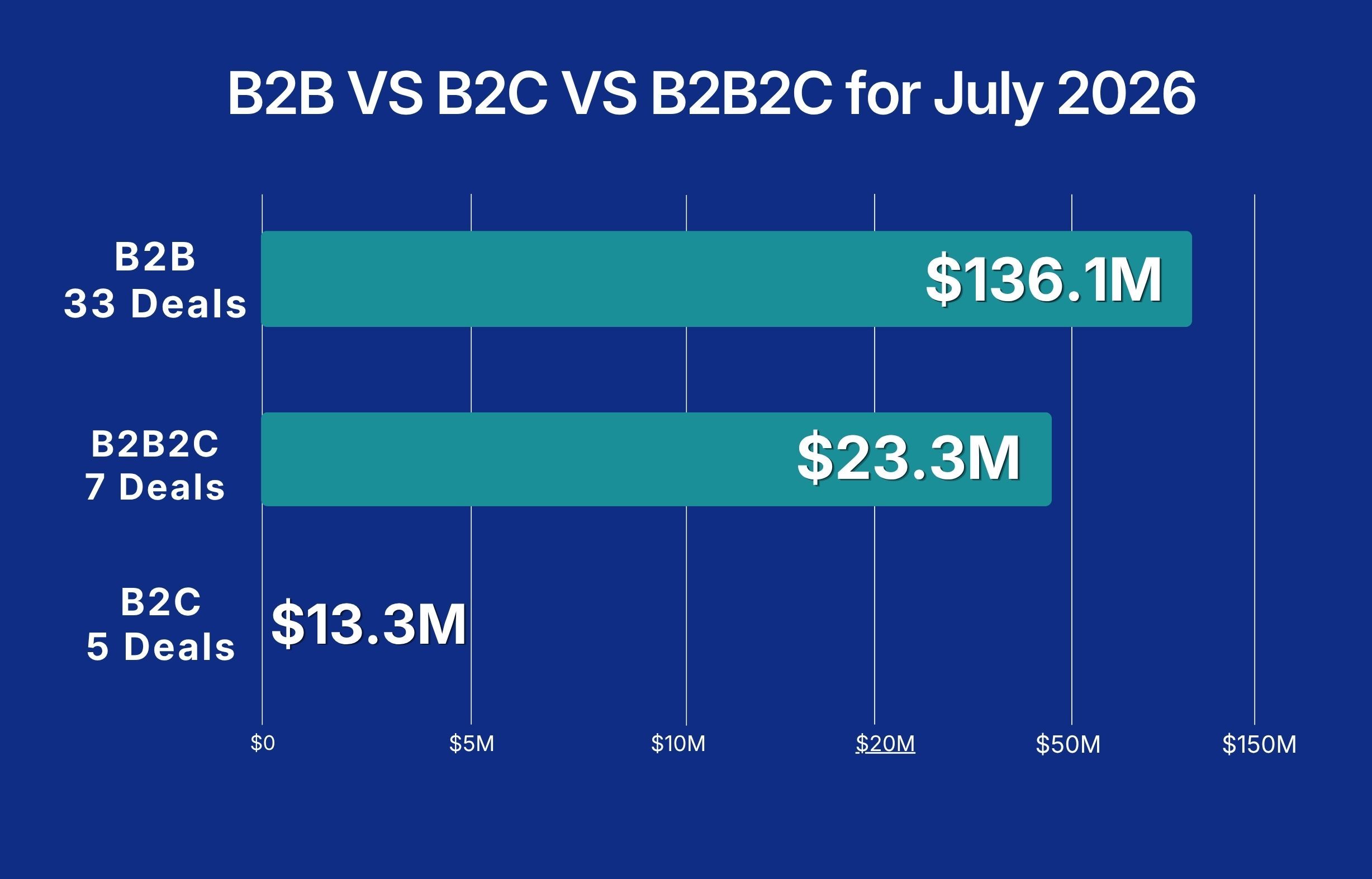
B2B startups maintained their lead over other business models, raising $136 million across 33 transactions. They accounted for nearly 79% of all capital deployed during the month.
Consumer-facing startups secured $13.3 million across five deals, while companies serving both businesses and consumers raised $23.3 million through seven transactions.
The gap reflects investors’ continued preference for business-focused models, which are often perceived as offering clearer revenue visibility and more predictable customer economics during uncertain market conditions.
Female founders remain underfunded
Funding for female-founded startups remained marginal in July.
Startups founded solely by women raised $1.7 million across four transactions, equivalent to less than 1% of the month’s total investment.
Male-founded startups received 97% of all funding, while four companies founded by mixed-gender teams collectively raised $3 million.
The imbalance remains one of the most persistent structural gaps in the regional ecosystem. Although female-founded companies continue to appear in the deal count, the capital allocated to them remains disproportionately small.
July’s figures point to a market that improved slightly in headline terms but remained dependent on debt and a narrow group of transactions. Saudi Arabia’s return to the top and the rise of e-commerce reshaped the monthly rankings, yet the absence of mega deals and late-stage rounds shows that investors are still exercising caution.
The second half of 2026 has therefore begun with higher funding than June but not yet with a meaningful recovery in equity investment. Whether the improvement gains momentum will depend on the return of larger rounds and a broader distribution of capital across countries, sectors and founder profiles.
These monthly reports are a collaboration between Wamda and Digital Digest.