
Taager moves into China to fix sourcing bottlenecks for MENA sellers
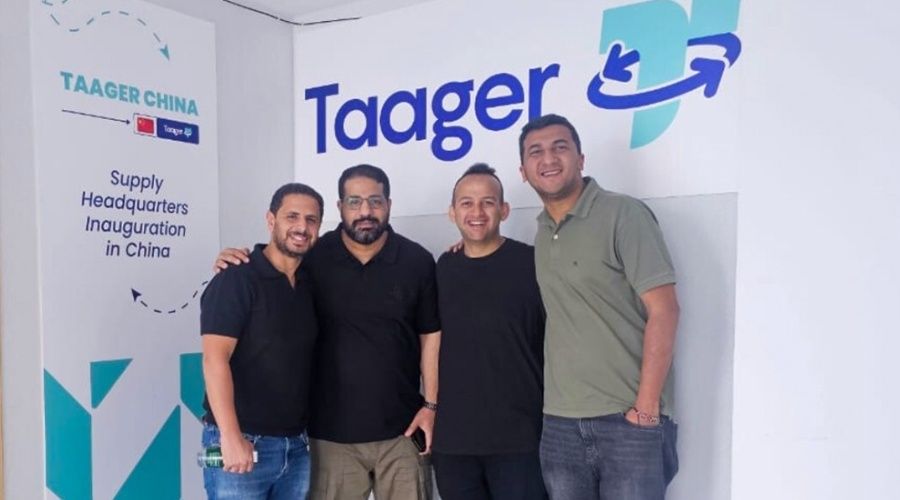
- Egypt-born and Saudi Arabia-HQ social e-commerce platform Taager Taager has opened its first supply office in China to strengthen cross-border commerce infrastructure.
- The move marks a shift from a software layer to a vertically integrated supply chain model.
- Taager aims to solve early-stage bottlenecks in e-commerce, particularly product sourcing, quality control, and lead times.
- Founded in 2019 by Abdelrahman Sherief, Ahmed Ismail, Ismail Omar and Mohammed Elhorishy, Taager’s platform enables anyone to start and scale their social e-commerce business by providing products, storage, shipping, and customer collection.
- The move positions Taager as a full-stack infrastructure provider, not just a marketplace.
- In late 2025, Taager launched operations in Casablanca, marking its official entry into Morocco and its first North African expansion.
Press release:
The MENA e-commerce landscape is often discussed in terms of “last-mile delivery” and “payment gateways". However, for the thousands of social e-commerce merchants across Egypt, Saudi Arabia, and the GCC, the real bottleneck starts much earlier: at the source.
Today, Taager, the Cairo-founded e-commerce empowerment platform, is announcing a strategic pivot to address this gap. By opening its first dedicated supply office in China, the company is moving beyond being a software layer to becoming a vertically integrated infrastructure provider for cross-border commerce.
Shortening the Distance to the Source
In the traditional e-commerce entrepreneurship model, merchants often face a “sourcing lottery”—dealing with fragmented supply chains, inconsistent product quality, and unpredictable lead times. By establishing a physical footprint in China, Taager aims to localise access to the global supply chain for regional sellers.
The move allows Taager to oversee the entire lifecycle of a product before it ever reaches a warehouse in Riyadh or Cairo. This includes:
- On-ground Quality Assurance: Direct inspection of goods to reduce return rates, a major pain point for MENA e-commerce.
- Direct Supplier Partnerships: Negotiating at the factory level to ensure price competitiveness for merchants.
- Agile Sourcing: Identifying and moving trending global products into the MENA market faster than traditional import cycles allow.
- Enhanced Variety of SKUs: Direct access to a wider range of SKU bases with better ties to first-hand sourcers and manufacturers.
The Supply Perspective: “Closer to Where Everything Starts”
For Mohamed Helal, VP of Supply at Taager, the expansion is a natural evolution of the company’s “zero-barrier” mission.
“For a long time, we’ve been focused on enabling sellers to grow across markets by removing the need for inventory,” says Helal. “But to unlock the next level of scale, we needed to be closer to supply, closer to how products are sourced, evaluated, and moved. This office isn’t just about expansion; it’s about control and reliability.
Building the “Operating System” for Taager model
The regional demand for globally sourced products is skyrocketing, but the infrastructure to support it has remained siloed. Mohamed Helal, VP of Supply at Taager, notes that the China office will function as a bridge between two distinct ecosystems.
What This Means for the MENA Ecosystem
Taager’s move comes at a time when cross-border trade is becoming a central pillar of the region’s digital economy. As competition heats up, the winners won’t just be the platforms with the best apps, but those with the most resilient supply chains.
By integrating more deeply into the manufacturing hubs of China, Taager is positioning itself as more than just a marketplace; it is becoming the infrastructure layer that allows a single entrepreneur in a rural village to compete with established retailers.
As Taager continues to scale across Egyptian and GCC marketplaces, the focus remains clear: the future of social commerce isn’t just digital, it’s deeply, physically integrated.