
MENA startup funding jumps to $1.65 billion in Q3, with Saudi Arabia taking the lead
Startup investment across the Middle East and North Africa more than doubled in the third quarter of 2026, driven by a wave of large Saudi fintech deals that helped revive funding activity despite persistent geopolitical uncertainty. Yet the recovery remained heavily concentrated in a handful of companies and markets, raising questions about whether the momentum can extend across the wider ecosystem.
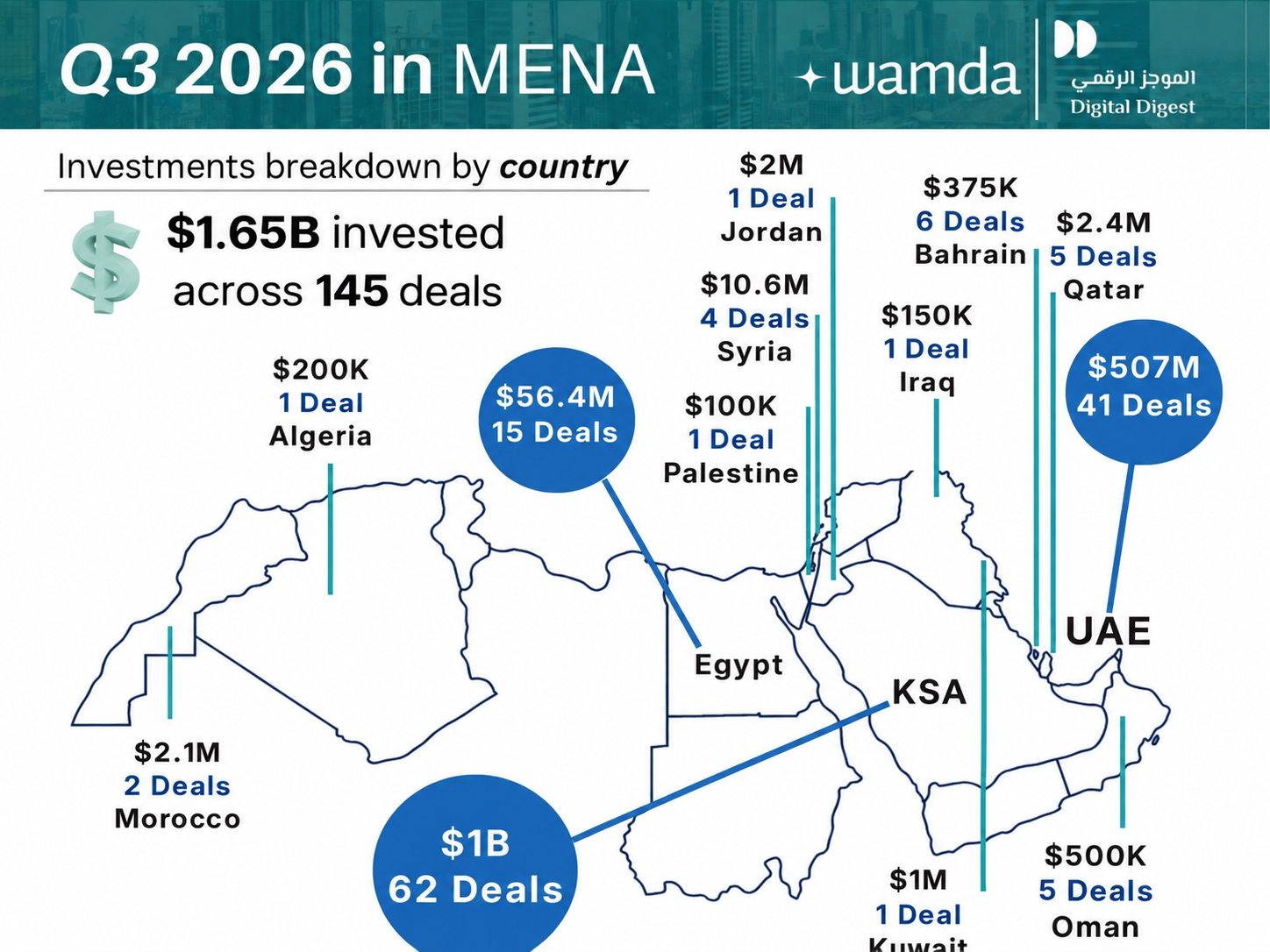
Startups across MENA raised $1.65 billion through 145 deals between July and September, up 108% from the previous quarter, while deal volume increased 39%. Despite the sharp quarterly rebound, funding remained approximately 63% below the $4.5 billion recorded during the same period last year.
The recovery gained momentum in September, when regional funding exceeded $1.1 billion, following a subdued July and an August rebound driven largely by two UAE-based companies. Saudi Arabia reclaimed the lead from the UAE, accounting for the majority of capital deployed during the quarter.
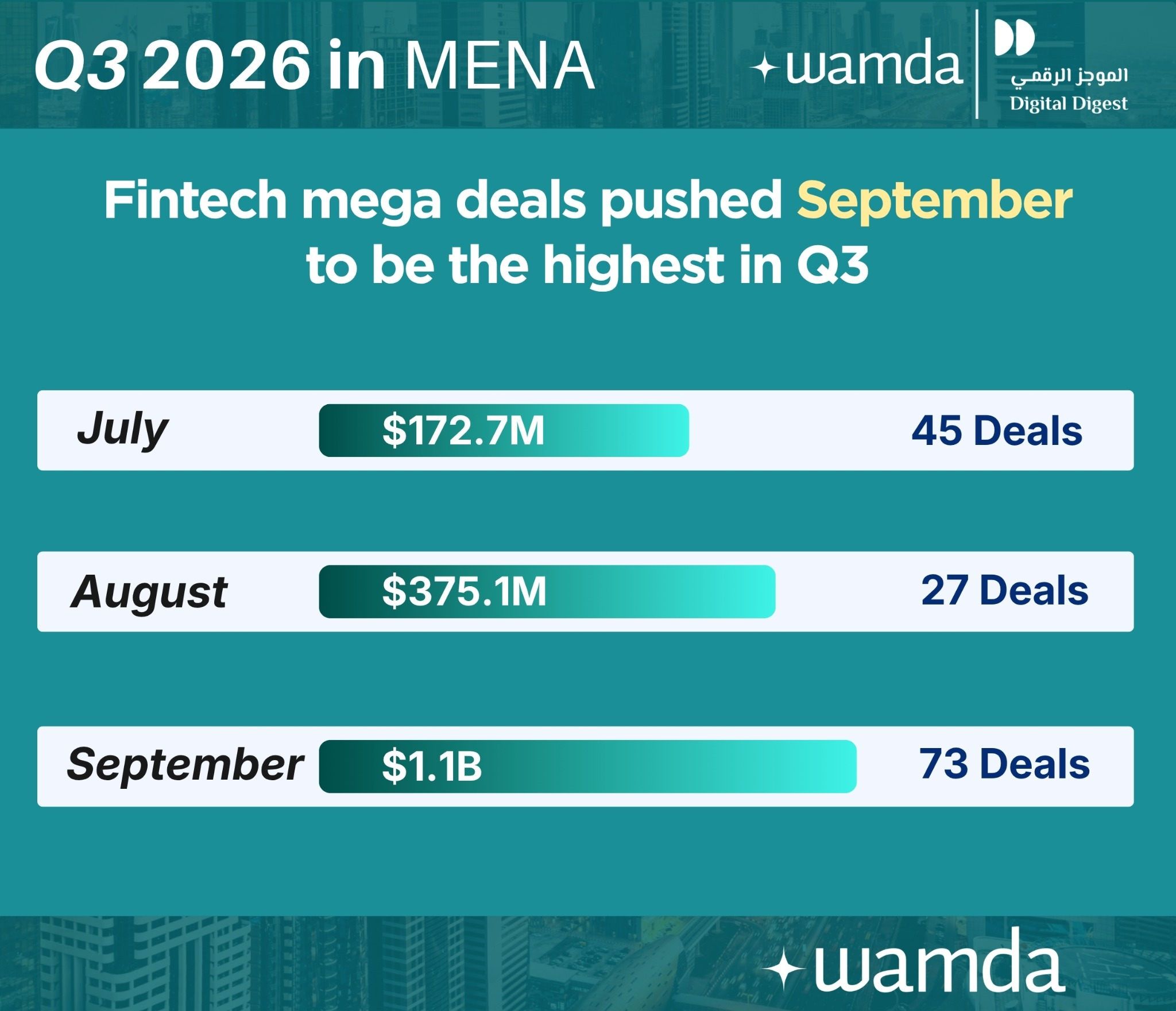
The composition of funding also showed a notable shift. Debt financing accounted for $441 million across 10 transactions, representing 26.8% of total investment, compared with almost 59% during 2025. Non-debt funding reached $1.21 billion, suggesting that the recovery was not solely dependent on credit-backed transactions.
The quarter unfolded against a challenging geopolitical backdrop, with regional military tensions, disruptions to maritime trade and volatile energy markets complicating the investment outlook. Nevertheless, several established startups managed to secure substantial financing, demonstrating continued investor appetite for businesses with the scale and growth potential to attract large commitments.
But the headline figures obscure a more uneven picture. Capital remained concentrated in fintech, Saudi Arabia and the UAE dominated the regional rankings, and male-led startups captured nearly all the funding deployed.
Fintech dominates as large funding rounds return
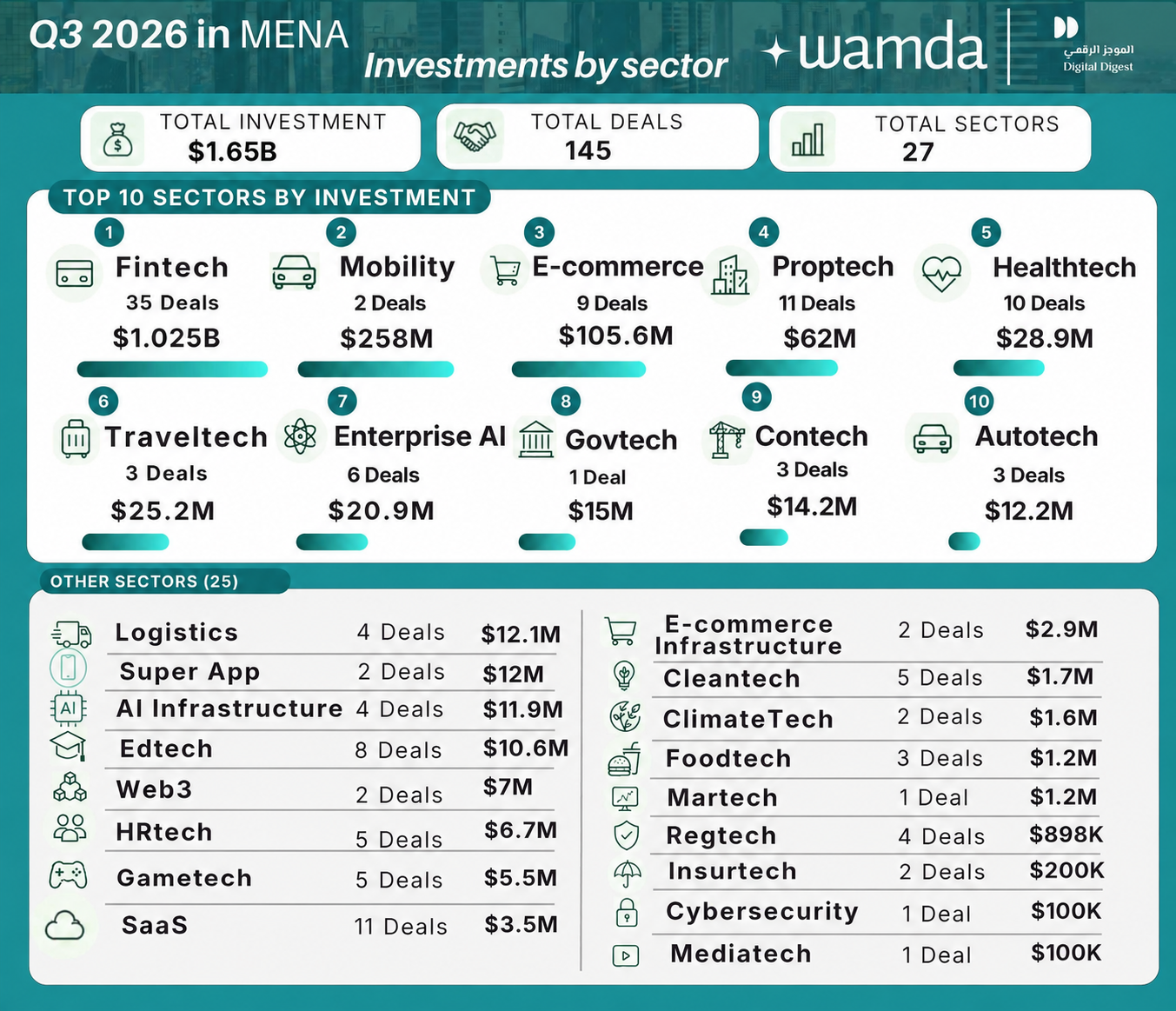
Fintech strengthened its position as the region's leading investment sector, attracting $1.03 billion across 35 transactions, equivalent to approximately 62% of total quarterly funding.
Mobility ranked second, raising $285 million through just two deals, followed by e-commerce, which secured $105.6 million across nine transactions.
The sector rankings highlighted the outsized influence of a handful of large funding rounds. Saudi fintech companies Barq, Tabby and Lendo alone attracted a combined $762.5 million, accounting for nearly three-quarters of the capital deployed in fintech during the quarter.
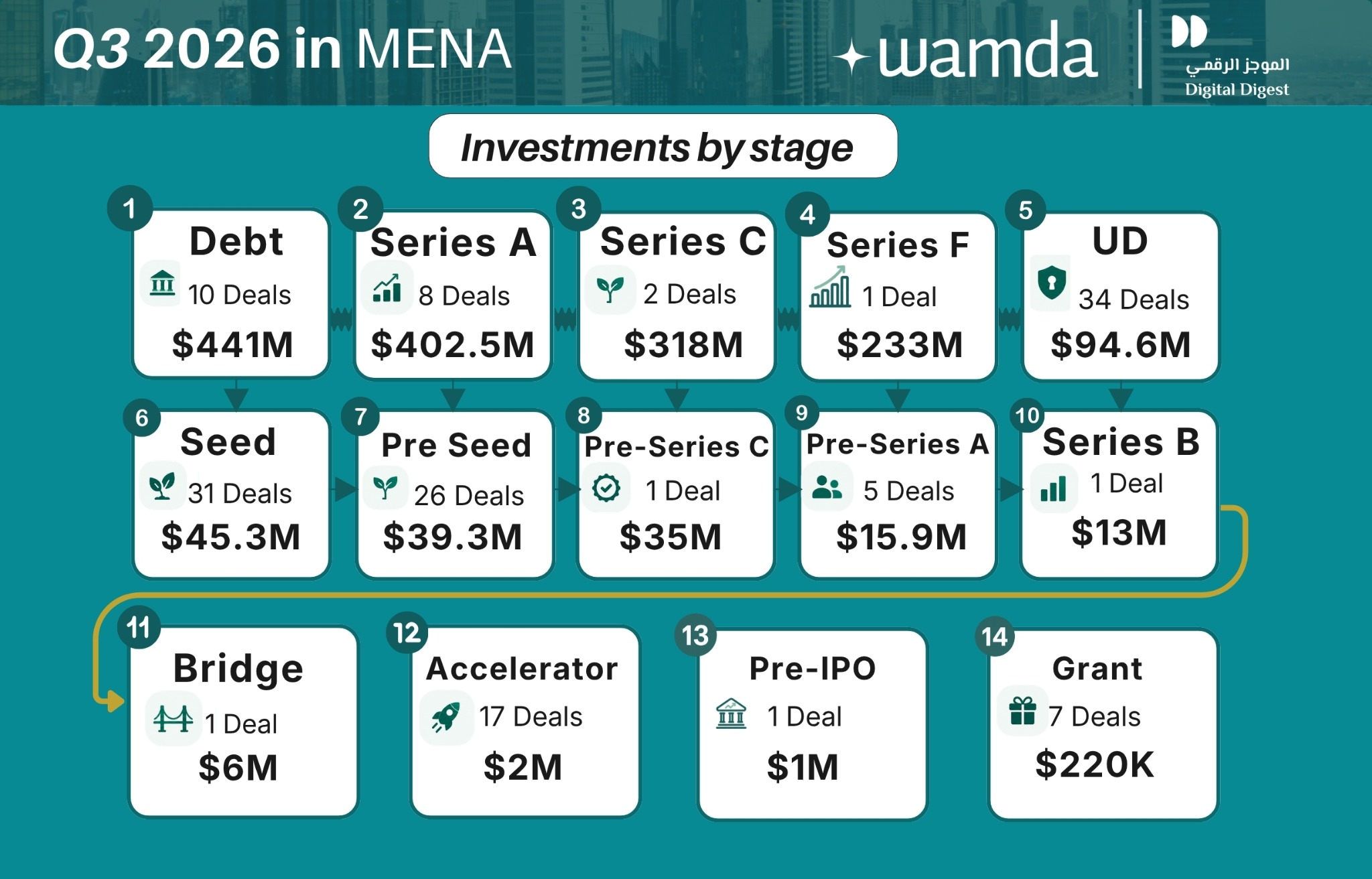
Funding by stage revealed a similarly concentrated landscape.
Early-stage startups accounted for the largest share of deal activity, with 94 companies raising $505.4 million. Later-stage startups secured $606 million across just seven transactions, reflecting renewed investor appetite for more mature businesses capable of attracting sizable funding commitments.
Another 34 startups did not disclose their funding stages, while 10 transactions were classified as debt financing.
The figures suggest that while early-stage investment remained active, a small number of established companies continued to attract a disproportionate share of available capital.
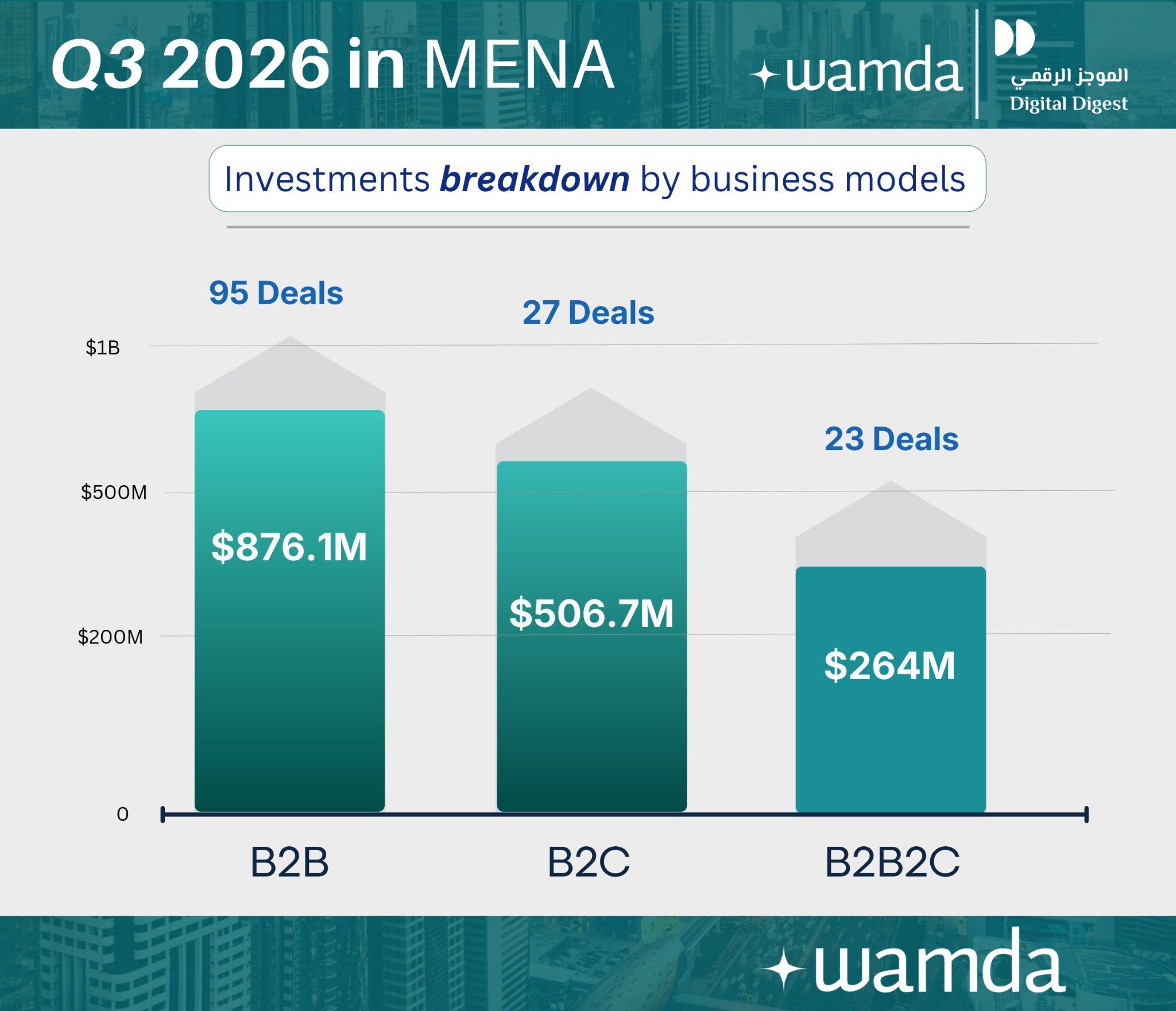
Business-to-business (B2B) startups maintained their lead, securing $876.2 million across 95 transactions. Business-to-consumer (B2C) companies followed with $506.7 million across 27 deals, while the remaining $264.1 million went to startups operating across both business models.
The gender funding gap, meanwhile, showed little sign of narrowing.
Male-led startups attracted $1.62 billion across 116 deals, representing 98.3% of all capital raised during the quarter. Startups founded by mixed-gender teams secured $15.9 million across 13 transactions, while female-led startups raised just $12.7 million through 16 deals, accounting for less than 1% of total investment.
The disparity was particularly striking given the overall recovery in funding. While capital returned to the ecosystem, the overwhelming majority flowed to male-led companies, reinforcing the persistent imbalance in access to venture capital.
Saudi Arabia reclaims the lead
Saudi Arabia emerged as MENA's largest startup funding market in the third quarter, attracting approximately $1 billion across 62 transactions and reclaiming the top position from the UAE.
The kingdom recorded a more than tenfold increase in funding from the $102 million raised in the previous quarter, largely driven by a series of large fintech transactions announced in September.
The resurgence coincided with LEAP 2026, held in Riyadh from Aug. 31 to Sept. 3, which brought together technology companies, investors and startups. However, the quarter's performance was shaped primarily by a handful of large transactions rather than an evenly distributed recovery in investment activity.
Fintech was the clear driver of Saudi Arabia's funding growth, attracting $815.8 million across 16 transactions. E-commerce ranked second with $98 million raised through five deals, followed by proptech, which secured $50.3 million across four transactions.
Three fintech transactions stood out.
Barq closed a $329.5 million Series A round at a valuation of $1.85 billion, while Tabby raised $233 million in Series F funding, valuing the buy now, pay later company at $6.5 billion. Lendo secured another $200 million through debt financing.
Together, the three transactions accounted for $762.5 million, equivalent to approximately three-quarters of the kingdom's quarterly funding and more than 90% of its fintech investment.
The concentration illustrates the growing influence of Saudi fintech companies on regional funding performance, particularly as larger businesses continue to attract capital amid a challenging investment environment.
Debt remained an important component of Saudi Arabia's funding landscape, accounting for $372 million across six transactions.
Early-stage startups nevertheless maintained a strong presence, with 34 companies raising a combined $392.7 million. Another 19 startups did not disclose their funding stages.
Saudi Arabia's performance highlighted its ability to attract sizable investment commitments despite regional uncertainty. However, the significant concentration of funding in a few fintech companies suggests that the quarter's rebound was driven more by the scale of individual transactions than a broad-based increase in investment across the ecosystem.
UAE slips to second despite strong late-stage activity
The UAE retreated to second place in the regional rankings after leading MENA startup funding during the previous quarter.
UAE-based startups raised $507 million across 41 transactions, down 14% from the $591.3 million recorded in Q2.
Despite the decline, the country continued to attract substantial later-stage investment, reinforcing its position as one of the region's most established startup funding markets.
Unlike Saudi Arabia, where fintech dominated investment, mobility emerged as the UAE's largest sector, attracting $250 million through a single transaction. Fintech ranked second with $164.3 million across 15 deals, followed by healthtech, which secured $25.2 million through three transactions.
Two later-stage funding rounds accounted for nearly 63% of the country's quarterly investment.
Mobility company Moove raised $250 million in a Series C round, while fintech Fasset secured $68 million in its own Series C financing. Together, the transactions brought in $318 million, highlighting the continued availability of large funding commitments for more mature businesses.
Early-stage investment remained comparatively active, with 29 startups securing $86.5 million. Debt financing accounted for $68 million across three transactions, while another seven startups did not disclose their funding stages.
The UAE's performance reflected continued investor appetite for established businesses, even as overall funding declined from the previous quarter.
Yet the reliance on a limited number of large transactions also exposed the uneven nature of the recovery. Excluding Moove and Fasset, UAE startups attracted just $189 million during the quarter, illustrating the extent to which individual deals shaped the country's funding performance.
Egypt struggles to regain momentum
Egypt remained the region's third-largest startup funding market, but investment activity continued to weaken as startups grappled with constrained access to capital and a shortage of sizable financing rounds.
Egyptian startups raised $56.4 million across 15 transactions during the third quarter, down 22% from the $72.6 million recorded in Q2.
The country's quarterly performance was heavily dependent on a single transaction.
Payments infrastructure provider Paymob secured $35 million in a pre-Series C round, accounting for approximately 62% of all capital raised by Egyptian startups during the period.
Without Paymob's financing, Egypt's quarterly total would have fallen to just $21.4 million, underscoring the limited availability of substantial funding for other companies.
Fintech remained the country's leading investment sector, attracting $45 million across two transactions. Edtech ranked second with $3 million raised through one deal, followed by e-commerce infrastructure, which secured $2.8 million in a single transaction.
Early-stage startups accounted for the majority of deal activity, with 10 companies raising a combined $19.3 million.
Paymob's transaction was the country's only later-stage financing round, while debt funding accounted for $1 million across one deal. Another three startups did not disclose their funding stages.
Egypt's continued slowdown reflected a more challenging investment environment, with limited capital availability and fewer large transactions weighing on the country's quarterly performance.
A strong rebound, but not yet a broad recovery
The third-quarter rebound pushed MENA startup funding to approximately $3.4 billion in the first nine months of 2026, providing renewed momentum after a difficult first half marked by geopolitical instability and increasingly selective investment activity.
The improvement was significant. Funding more than doubled from the previous quarter, deal activity recovered, and non-debt financing accounted for more than 73% of the capital deployed.
The return of sizable equity rounds also demonstrated that investors remained willing to back regional companies capable of delivering scale, even as uncertainty continued to cloud the broader economic outlook.
Yet the recovery was far from evenly distributed.
Saudi Arabia attracted the majority of investment, fintech absorbed more than 60% of total funding, and a handful of large transactions accounted for a substantial share of the quarter's capital. Meanwhile, Egypt continued to struggle to regain momentum, and female-led startups remained severely underfunded.
The geopolitical outlook adds another layer of uncertainty. Continued military tensions, disruptions to shipping through the Strait of Hormuz and the Bab el-Mandeb Strait, and potential volatility in energy markets could weigh on investor confidence and complicate funding decisions in the months ahead.
With the fourth quarter underway, the sustainability of the rebound remains uncertain.
The latest figures demonstrate that capital is still accessible for MENA startups, particularly those operating in established sectors and major Gulf markets. What remains less clear is whether that investment appetite can extend beyond a narrow group of companies and translate into wider access to funding.
For a region that has repeatedly navigated periods of economic and geopolitical instability, the third quarter offered evidence of resilience, but not yet of a comprehensive recovery.
The third quarter proved that MENA startups can still attract large funding commitments. The fourth will test whether that capital can reach a broader range of companies, sectors and markets.
This quarterly investment report is a collaboration between Wamda and Digital Digest.